The Houston Chronicle reports that more than 4,000 people have died over the past five years in the Brazilian beach city's war on drug gangs in the favelas. More than 900 have died so far this year at the hands of the police--some of them killed execution-style.
To be fair, the police note that, on average, one officer is killed each week in the famed beachfront city.
Still, favela residents, most of whom abhor the traficantes, hate the police more. They feel the cops are part of the problem (and in league with the traffickers), not part of the solution
Wednesday, December 07, 2005


Tuesday, December 06, 2005
Blocking the 'Yellow Monsters'
A town council in Botswana has wisely acted to block a national government plan to demolish a local squatter encampment, allAfrica.com reports. Mayor Christopher Ramolemana wants people in the community called Baghdad Town to be guaranteed adequate relocation before the bulldozers, or 'yellow monsters,' can start their awful work. As the Mayor sensibly says, "After we have given people plots, we can then monitor squatting and control it."
Squatters have lives, too
Consider just how wrenching an eviction can be: “They [the authorities] think of us as garbage," a Kolkata squatter tells The Statesman. "But what’s the difference between them and us? We are made of flesh and blood just like them. I just want them to come and live here for one day. They have always tried to evict us whenever the children’s examinations are on. My son is currently having his half-yearly exams. How will he study among all this confusion?”
A tale of two Manilas
Makati City, the downtown area of Manila, boasts the head offices of 400 of the leading corporations of the Philippines, the country's stock exchange, 472 banks, 1,832 financial institutions, 149 insurance companies and 86 foreign embassies and consulates. And that doesn't include the five star hotels, upmarket shopping malls and some of the country's most exclusive housing enclaves.
"On the surface Makati gives the impression of a first world city but tucked away from the bright lights is Makati's dark side where thousands of poor live in shacks, surviving day-to-day off the streets."
Here, from Agence France Presse, is a profile of Makati City's Mayor, Jejomar 'Jojo' Binay, who has improved the finances of the city, but stands accused of taking a page from the Three Penny Opera and using the poor hordes who are beholden to him to quash any opposition. Even street peddlers must hew to Binay's policies or risk losing their permits to operate, the article says.
"On the surface Makati gives the impression of a first world city but tucked away from the bright lights is Makati's dark side where thousands of poor live in shacks, surviving day-to-day off the streets."
Here, from Agence France Presse, is a profile of Makati City's Mayor, Jejomar 'Jojo' Binay, who has improved the finances of the city, but stands accused of taking a page from the Three Penny Opera and using the poor hordes who are beholden to him to quash any opposition. Even street peddlers must hew to Binay's policies or risk losing their permits to operate, the article says.
Most tsunami victims still homeless
The lead says it all: "Nearly a year after the Indian Ocean tsunami, almost all of the aid recipients in villages hit by the waves are still living in temporary shelters or camps, according to a survey released on Tuesday." Here's coverage, from Reuters.com.
Monday, December 05, 2005
Kolkata update
More jockeying in Kolkata, as squatters facing court-mandated eviction seek firm promises that they will get new land, The Statesman reports.
This seems a legitmate fear. After all, if the squatters had not mobilized to protect their rights, they would have been ejected from the land they have called home for a generation with no replacement site and no compensation. They are, literally, fighting for their lives.
This seems a legitmate fear. After all, if the squatters had not mobilized to protect their rights, they would have been ejected from the land they have called home for a generation with no replacement site and no compensation. They are, literally, fighting for their lives.
Sunday, December 04, 2005
The end of London's oldest squat
UK Police have ejected residents from London's oldest squat. The St. Agnes Place squatters, who held their homes for a generation, have been evicted, the BBC reports.
I don't know all the facts, but why couldn't the squatters t go to court to argue adverse possession, as they had openly and notoriously held their homes for 30 years? And why couldn't the council work out a deal to save some of the buildings, which are likely better than anything new that will be built. Anyone who knows more, please advise.
Here's a more realistic appraisal, from a former resident, via The Guardian.
I don't know all the facts, but why couldn't the squatters t go to court to argue adverse possession, as they had openly and notoriously held their homes for 30 years? And why couldn't the council work out a deal to save some of the buildings, which are likely better than anything new that will be built. Anyone who knows more, please advise.
Here's a more realistic appraisal, from a former resident, via The Guardian.
Saturday, November 26, 2005
Water inequality
This study from Kenya shows why squatters don't get adequate water. Only 5 percent of the people getting municipal water service are poor. The bulk of the poor must buy their water from private kiosks. And check this out: "Kiosks receive water from the public utility at a subsidised price of US$ 0.15 per cubic meter but charge their customers, on average, 18 times that price."
Hmmmm. Sounds like when water is made a profit center, you get high prices and controlled scarcity.
The Kenyan government could do more for the poor by piping their neighborhoods for water than all the rebuilding plans currently on the drawing boards.
Hmmmm. Sounds like when water is made a profit center, you get high prices and controlled scarcity.
The Kenyan government could do more for the poor by piping their neighborhoods for water than all the rebuilding plans currently on the drawing boards.
Tuesday, November 22, 2005
Kokata politicos try to have it both ways
Politicians in Kolkata vow squatters will be out by the end of the month, even as they have no idea where the people will go if their communities are torn down, The Statesman reports.
Monday, November 21, 2005
Brooms and firecrackers vs. the police
Kolkata's Gobindapur Rail Colony squatters are still negotiating for resettlement, but they are remaining vigilant against any sudden police action, The Statesman reports. The squatters are insisting that they be relocated within 3 kilometers of their present location, so that they can keep their jobs in the neighborhood. With a Nov. 30th deadline for ejectment inching closer, they are maintaining all night vigils while their leadership and local politicos attempt to sort out a solution.
Is a corporation entitled to human rights?
The European Court of Human Rights thinks so, according to this article from the Guardian.
On a 4-3 vote, the court ruled that a British real estate corporation was deprived of its human rights when a squatter family was granted title to a disputed parcel after a dozen years of using the land for grazing its herd. Despite the longstanding tradition of adverse possession, or squatters rights, the court, based in Strasbourg, ruled that because the company was not notified of the adverse possession claim against it and was not compensated for the loss of the land, its human rights had been violated. The court ruled that two British laws--the Limitation Act 1980 and the Land Registration Act 1925--created "an individual and excessive burden and upset the fair balance between the demands of the public interest on the one hand and the applicants’ right to the peaceful enjoyment of their possessions on the other."
It's hard to see how any form of squatters rights, no matter how narrowly construed, could meet the majority's test, since it seems to have judged that private ownership is in the public interest while squatter ownership is not. The four judges do not say why the family using the parcel in question for grazing was not entitled to the peaceful enjoyment of its possession, while the fee owner was.
The dissenters suggest that there was absolutely no human rights issue in question, because the realty company could have taken action at any time to show its intent to keep the property. "The real "fault" in this case, if there has been any, lies with the applicant companies....[T]he applicant company was not a private individual or an ordinary company with, one could assume, limited knowledge on relevant real estate legislation. They were specialised professional real estate developers and such a company had or should have had full knowledge about relevant legislation and the duties involved....Possession (ownership) carries not only rights but also and always some duties."
The European Court's jurisdiction dates from 1950, when the Council of Europe met in Rome and signed an agreement that included this phrase: "Every natural or legal person is entitled to the peaceful enjoyment of his possessions. No one shall be deprived of his possessions except in the public interest and subject to the conditions provided for by law and by the general principle of international law."
For more information, visit the web site of the European Court of Human Rights. The full court decision and dissent is available here.)
On a 4-3 vote, the court ruled that a British real estate corporation was deprived of its human rights when a squatter family was granted title to a disputed parcel after a dozen years of using the land for grazing its herd. Despite the longstanding tradition of adverse possession, or squatters rights, the court, based in Strasbourg, ruled that because the company was not notified of the adverse possession claim against it and was not compensated for the loss of the land, its human rights had been violated. The court ruled that two British laws--the Limitation Act 1980 and the Land Registration Act 1925--created "an individual and excessive burden and upset the fair balance between the demands of the public interest on the one hand and the applicants’ right to the peaceful enjoyment of their possessions on the other."
It's hard to see how any form of squatters rights, no matter how narrowly construed, could meet the majority's test, since it seems to have judged that private ownership is in the public interest while squatter ownership is not. The four judges do not say why the family using the parcel in question for grazing was not entitled to the peaceful enjoyment of its possession, while the fee owner was.
The dissenters suggest that there was absolutely no human rights issue in question, because the realty company could have taken action at any time to show its intent to keep the property. "The real "fault" in this case, if there has been any, lies with the applicant companies....[T]he applicant company was not a private individual or an ordinary company with, one could assume, limited knowledge on relevant real estate legislation. They were specialised professional real estate developers and such a company had or should have had full knowledge about relevant legislation and the duties involved....Possession (ownership) carries not only rights but also and always some duties."
The European Court's jurisdiction dates from 1950, when the Council of Europe met in Rome and signed an agreement that included this phrase: "Every natural or legal person is entitled to the peaceful enjoyment of his possessions. No one shall be deprived of his possessions except in the public interest and subject to the conditions provided for by law and by the general principle of international law."
For more information, visit the web site of the European Court of Human Rights. The full court decision and dissent is available here.)
Sunday, November 20, 2005
Fire guts a Metro Manila squatter community
A weekend fire tore through a squatter community in Makati City, part of Metro Manila. There are few details, according to this Manila Times brief. Makati is a divided city, home to Manila's central business district and many flashy shopping streets (Makati alone boasts a half dozen 5-star hotels), but also to extremely poor squatter areas on the east side of town (see the city's official website and wikipedia.)
Saturday, November 19, 2005
What's a little Murambatsvina among friends?
Beijing tries its hand at Zimbabwe's game, and bulldozes Suojiacun, a landmark artist's colony.
The artists are not squatters. They bought their studios from a developer, but the homes turned out to be illegal. Beijing is not prosecuting the developer, only ejecting the residents.
Interestingly, the city's official website recommends that travelers visit Suojiacun. Oops.
[thanks to Michael Ashkin for alerting me to this story]
The artists are not squatters. They bought their studios from a developer, but the homes turned out to be illegal. Beijing is not prosecuting the developer, only ejecting the residents.
Interestingly, the city's official website recommends that travelers visit Suojiacun. Oops.
[thanks to Michael Ashkin for alerting me to this story]
Friday, November 18, 2005
Kolkata confidence
Squatters in Kolkata are extra vigilant now that the court ordered time for them to sign eviction papers has passed. They have urged all residents of the Gobindapur Railway Colony to keep their lights on, so they have advance warning if the police make a sudden push to drive them out. The squatters hope the state government will find new land for them before Nov. 30th, the final date set by the court for their eviction, The Statesman reports.
World Toilet Day
One third of the world's population doesn't have access to proper toilets--although the situation is actually quite a bit more bleak, as the statistic counts pit latrines (a seat is placed over a deep hole) as adequate. That means that Kibera, in Nairobi, Kenya, where more than 500,000 people live with only shared pit latrines, might not even be included. The Guardian has the scoop.
A sensible stand
This sounds fair: Squatters in Kolkata are being required to provide written documentation of their willingness to move--so they have adopted a sensible response: they will not provide their written promises until the government promises in writing to provide them with new homes. Read about it in The Statesman
In Italy, a leftist takes on immigrant squatters
Squatters can't even trust progressives to be sympathetic anymore. The leftist Mayor of Bologna, Italy has destroyed a riverside squatter village, according to this Reuters dispatch. The politico, Sergio Cofferati, is apparently playing to the city's rising anti-immigrant sentiment after a massive influx of new arrivals over the past two years--an 18 percent jump from 2003 to 2004, and another 20% jump through October 2005. Immigrants now account for 8 percent of Bologna's population. Cofferati called in the bulldozers to raze a squatter encampment set up by immigrants from Romania. He claims he wants to provide better housing for immigrants, though many of those whose homes he destroyed are being deported.
Thursday, November 17, 2005
Politics and the promised land
The Kenyan government is promising land to rural squatters throughout the country, in an effort to win their support for a new constitution that would reduce democracy, The East African Standard reports. The proposed constitution, up for a vote on Monday, Nov. 21, would consolidate power in the office of the president. A constitutional review commission had suggested a more democratic structure, requiring the president to share some powers with parliament and the judiciary. The governing National Rainbow Coalition split over the proposal. President Mwai Kibaki and his allies want to keep centralized power. Opponents within the government suggest that the plan is a power grab and will return the nation to the dictatorial strongman tradition of former president Daniel arap Moi.
Rail Roko
Squatters in Kolkata did blocked commuter rail tracks for two hours yesterday, and, in response, the state urban development and municipal affairs minister promised that the government would try to find land where the squatters can relocate. But that's still far from a firm commitment of no eviction without relocation. Things are set to climax Nov. 30th, when a court order requires the squatters in the Gobindapur Rail Colony to clear out or be moved out.
Tuesday, November 15, 2005
Squatters gear up for civil disobedience in India
Kolkata's Gobindapur Rail Colony squatters are ready to engage in civil disobedience in their fight to avoid being summarily evicted next week, according to his report from The Statesman.
Though I can certainly imagine what the words mean, if anyone out there is fluent in Hinglish (Hindi-influenced English), could you please help me pin down the exact meaning of the two things the squatters say they are going to do: rail roko and dharna.
Though I can certainly imagine what the words mean, if anyone out there is fluent in Hinglish (Hindi-influenced English), could you please help me pin down the exact meaning of the two things the squatters say they are going to do: rail roko and dharna.
Monday, November 14, 2005
More squatter evictions in Zimbabwe
In violation of a court order barring evictions without proper relocation housing, 300 squatters, who were roughing it in crude encampments in the poor Mbare neighborhood of Harare have been packed into trucks and relocated out of town, according to this report from Cape Town's Independent newspaper.
Also, International Herald Tribune reports that, though the squatters have been scattered, the scorched earth policy followed by Mugabe is still quite evident. The paper cites Killarney, a former squatter neighborhood of Bulawayo, Zimbabwe's second-largest city. What once was an impoverished but vital community of 800 families is now a forlorn patch of dirt. "Before the demolitions," writes reporter Michael Wines, "it was dirt-poor but thriving, subdivided into three villages with stores and services. All that has been razed and burned." This description is telling: "Today, Killarney is a moonscape of sunbaked dirt, scrub and burned-out rubble."
Also, International Herald Tribune reports that, though the squatters have been scattered, the scorched earth policy followed by Mugabe is still quite evident. The paper cites Killarney, a former squatter neighborhood of Bulawayo, Zimbabwe's second-largest city. What once was an impoverished but vital community of 800 families is now a forlorn patch of dirt. "Before the demolitions," writes reporter Michael Wines, "it was dirt-poor but thriving, subdivided into three villages with stores and services. All that has been razed and burned." This description is telling: "Today, Killarney is a moonscape of sunbaked dirt, scrub and burned-out rubble."
Sunday, November 13, 2005
New American Squatters?
A colony of 50 on the edge of the suburbs in Solano, California, as profiled in the San Francisco Chronicle. Unlike squatters in the developing world, who head to the cities to get a piece of the action, these rural revolutionaries present themselves as rugged individualists at a remove from the trappings of commercial society. It'll be interesting to see if their community survives, and even grows.
Saturday, November 12, 2005
United Front
Not a single one of the 20,000 families in the Gobindapur Rail Colony in Kolkata has signed up with the police to indicate their intent to vacate their homes, reports The Statesman. The court ruling mandating eviction requires all community residents to be gone by the end of this month. And where are they supposed to go? The police and the politicians and the judges don't care.
Wednesday, November 09, 2005
Rhino squatters headed to court; Kolkata squatters headed to street
Residents of the well-known Geneva squat Rhino have approached the federal courts to annul the order mandating their eviction by Nov. 22. If I understand the French of this swissinfo article correctly, the squatters argue that the eviction deadline was created by executive fiat, whereas there should be a court ruling before such a final action is enforced. Therefore, they argue, the high court should stop the ejectment plan.
Halfway around the globe, Kolkata's (that's Calcutta for those not initiated to the non-colonial spelling) Gobindapur Rail Colony squatters took to the streets today to protest the court decision that is forcing their eviction. According to this article from The Statesman, the squatters vowed to carry brooms and chili powder as defensive weapons against potential police violence.
Halfway around the globe, Kolkata's (that's Calcutta for those not initiated to the non-colonial spelling) Gobindapur Rail Colony squatters took to the streets today to protest the court decision that is forcing their eviction. According to this article from The Statesman, the squatters vowed to carry brooms and chili powder as defensive weapons against potential police violence.
Tuesday, November 08, 2005
Demonstration to support Rhino
A thousand people demonstrated over the weekend in Geneva in support of the squatters at Rhino, the Swiss news service Edicom reports (in French). The squatters have collected 11,000 signatures on a petition against the eviction. The government claims that it is attempting to find replacement housing for the approximately 70 people who live in the building, which has been squatted in for 17 years.
65,000 Manila cops are squatters
That's 56% of the police force, reports The Manila Times. The newspaper reports that the cops will get a pay increase next year. But don't count on that to make them move. I knew cops in India, Brazil and Turkey who were squatters. It's a question of how much apartments in legal neighborhoods cost.
Can governments across the developing world please think: if cops are squatters, then squatting is not breaking the law. If public servants are squatters, then squatter communities are not blight, but are simply affordable neighborhoods. Sometimes they're the only affordable neighborhoods in cities that otherwise make no provision for the poor.
Can governments across the developing world please think: if cops are squatters, then squatting is not breaking the law. If public servants are squatters, then squatter communities are not blight, but are simply affordable neighborhoods. Sometimes they're the only affordable neighborhoods in cities that otherwise make no provision for the poor.
Monday, November 07, 2005
The Statesman
Squatters in one Calcutta community don't intend to move, though their homes border a busy railway line, the Statesman reports. Gobindapur Rail Colony is a neighborhood of 20,000 families who have all been given until Nov. 10th to pull up stakes by the Supreme Court. But the squatters are adament about fighting the eviction. The residents have demanded replacement housing be provided close by, as their jobs, family networks, and schools are all in the area.
Gringoes
An interview with a martial arts teacher from Rocinha, from Gringoes, a web site about things Brazilian. A sensible excerpt:
What are common mistakes that foreigners make in Brazil?
They think the life here is all about playing and not working. Play is important but, we all need to live, so work is important. My American friends who come to visit me always ask about the women. Women are strong here. Never underestimate women.
They think where I live in a favela, is always dangerous, this is not true. I think there is more danger in the asfalto because tourists stay there. The thief will find you there, not come to my neighborhood. There is no crime in my neighborhood. The only crime is when the police come to invade.
What are common mistakes that foreigners make in Brazil?
They think the life here is all about playing and not working. Play is important but, we all need to live, so work is important. My American friends who come to visit me always ask about the women. Women are strong here. Never underestimate women.
They think where I live in a favela, is always dangerous, this is not true. I think there is more danger in the asfalto because tourists stay there. The thief will find you there, not come to my neighborhood. There is no crime in my neighborhood. The only crime is when the police come to invade.
Saturday, November 05, 2005
Government Alone Can't Solve the Housing Shortage
Another example of why government programs alone are not the answer to the housing shortage: Halfway through an ambitious 1.3 billion rand ($194 million) program to build affordable housing in Alexandra, South Africa, the program seems an abject failure, report The Star. Only 639 of 22 250 planned housing units have actually been built.
It's time for governments everywhere to stop scratching their heads. The solution to the global housing crisis is to figure out how to work with squatters. It's more cost-effective, more realistic, and can be achieved at a greater scale, than pushing squatters out and building new social housing.
It's time for governments everywhere to stop scratching their heads. The solution to the global housing crisis is to figure out how to work with squatters. It's more cost-effective, more realistic, and can be achieved at a greater scale, than pushing squatters out and building new social housing.
Squatter Microbes
This BBC dispatch about the impending eviction of the squatters who have lived on St. Agnes Place in London for better than 30 years features a revealing quote from a local politico:
Lambeth councillor Keith Flitchett said the squatters had been living "as parasites on council tenants for years, and the sooner they are out the better".
When the facts and morality aren't on your side, call 'em names. Isn't it the politicians who are the parasites? The squatters are just people attempting to live in self-sufficiency.
Lambeth councillor Keith Flitchett said the squatters had been living "as parasites on council tenants for years, and the sooner they are out the better".
When the facts and morality aren't on your side, call 'em names. Isn't it the politicians who are the parasites? The squatters are just people attempting to live in self-sufficiency.
Rhino-plasty
This short dispatch, in French, reveals a municipal offer to relocate Geneva's Rhino squatters elsewhere in the city.
Thursday, November 03, 2005
Supply electricity to squatters, Mubarak orders
Now this is just way too sensible to believe: Egyptian President Hosni Mubarak wants the government to supply electricity to squatters. Amazing what a bit of political opposition will do: turn a dictator into a populist.
Rasta squat
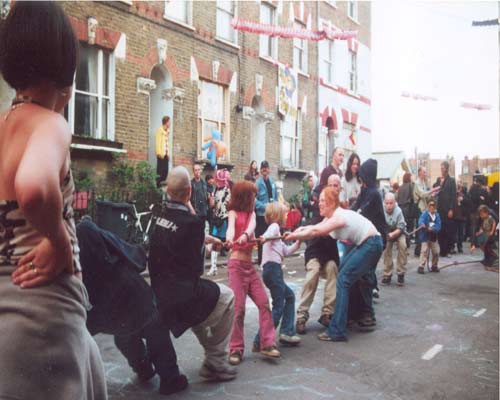
The squatters of St. Agnes Place in London have been in their homes for better than 30 years. This alone ought to qualify them for permanent residence status. But the local council in Kensington wants them out.
Officials of the Lambeth council are making contradictory arguments in support of the eviction. The Guardian claims that 22 of the squatter-occupied buildings will be replaced by social housing. But it also notes the argument that redevelopment is necessary to regenerate a rundown area plagued by crime and asserts that on the open market the homes, surrounded by parkland and close to the mass transit, could each fetch around £500,000.
Many of the squatters are Rastafarians, but there are also Brazilians, Moroccans, Poles, Germans, Spaniards, Indians, and, of all things, Brits.
Why can't they just stay in their homes. Thirty years ought to qualify as a possession right, if not a property right.
Rhino

More on the eviction order at Rhino, a Geneva squat that has been in existence for 17 years, from swissinfo.
It's the classic political strategy. The public prosecutor says the "illegal tenants" must be evicted by Nov. 22nd to allow the landlord to build large, low-cost flats. Yeah right: the building's privately owned and, as this swissinfo article on the housing crisis in Geneva notes, landlords contend that they cannot make money because of a governmental regulation that two-thirds of all new homes built in the canton (the swiss version of a state) be cheap and affordable.
Yet that's exactly the route this private owner says he's going to take.
Think about it: the squatters saved the building after it was abandoned. For 17 years, they prevented it from decaying. And now they're willing to pay rent. "We have always been prepared to pay rent since the beginning," one of them told swissinfo. "The goal has been to have a communal lease, but the offers that have been made to us have been crazy."
The landlord bought the building in 1998. He knew there were squatters there. He knew they had been there for a decade. Their occupation was open and notorious. Why is the government now doing his bidding?
China Drops Residency Restrictions -- but does it really matter?
Rich cities, poor countryside, open migration, no squatters. China seems to think it can have it both ways, according to this article from The New York Times, about the plan to end the hukou system that tied residents to their rural areas. But it seems like a game of bait and switch, for the government may revoke residency restrictions in 11 of the country's 23 provinces, but it expects that cities will assume greater control over the inflows. Migrants will still have to register and be accepted by municipalities. Thus, historian Qin Hui, of Qinghua University in Beijing, tells the paper: "The cities will become places where the relatively well off live. Beijing is not going to look like New Delhi, or even like Bangkok."
The move comes in response to growing social disparities and unrest in the rural areas. In addition, China boasts a floating population of 140 million migrant laborers, who are still counted as rural residents even though many of them have resided in cities for a decade or more, working on some of the country's mega-development projects. How will the rule change affect them?
The move comes in response to growing social disparities and unrest in the rural areas. In addition, China boasts a floating population of 140 million migrant laborers, who are still counted as rural residents even though many of them have resided in cities for a decade or more, working on some of the country's mega-development projects. How will the rule change affect them?
Why the sudden attacks on Europe's squatters?
Why are several European cities, which have great histories of tolerance, suddenly going after squatters? The two squats mentioned in a previous post--Rhino in Geneva and Christiania in Copenhagen--are everything people say they want squats to be: orderly, long lasting, well-run, communitarian, good neighbors. Christiania, in particular, is a huge and stable community. Over the decades, it has become part of the city's fabric, even serving as a tourist attraction, pulling in an estimate million visitors a year.
So why are the authorities moving to wipe these communities out?
Here are some thoughts. Please feel free to argue with/extend/add to this is comments. Let's have a robust political dialogue.
A century and a half ago, Pierre-Joseph Proudhon said property is robbery. Half a century ago, Andre Gorz modified him, noting that in the highest forms of capitalism, robbery is poetry. Today, property rights seem to be considered the route to salvation. Why? Come on guys: pile on. Just what is going on in the developed world that has made these communities suddenly so undesirable?
So why are the authorities moving to wipe these communities out?
Here are some thoughts. Please feel free to argue with/extend/add to this is comments. Let's have a robust political dialogue.
1. A loss of spirit: The original squatters, who were political, communitarian, and highly motivated have largely lost that fervor. More and more, the squats became simply places to live, and squatters themselves more individualistic.
2. Losing a public profile: The squatters also have ceased to have a high profile public presence and have mostly lost the support of the rest of the city. We are in an acquisitive, consumerist time, and people see the squatters as getting something for nothing, rather than as standing for a noble cause of a better life for all.
3. Fear of violating public order: Politicians like keeping people fearful of terrorist attacks and threats to public order, because with fear they will turn naturally to the security of concepts such as the strict adherence to property rights. Anyone standing counter to that is, in this thinking, a kind of terrorist.
4. Property values: Cities have become much more expensive (we should also be thinking about why this is, and why we accept it) and increasingly people are buying into the landlord-led argument that apartment buildings that are held out of the market (squats, rent control, public housing, etc.) are actually making rents higher for the rest of us. This is nonsense, of course (my landlord is illegally overcharging half the people in the building, but he has yet to offer to lower my rent), but it seems to be seductive nonsense for many people.
A century and a half ago, Pierre-Joseph Proudhon said property is robbery. Half a century ago, Andre Gorz modified him, noting that in the highest forms of capitalism, robbery is poetry. Today, property rights seem to be considered the route to salvation. Why? Come on guys: pile on. Just what is going on in the developed world that has made these communities suddenly so undesirable?
Wednesday, November 02, 2005
A Rocinha photo essay
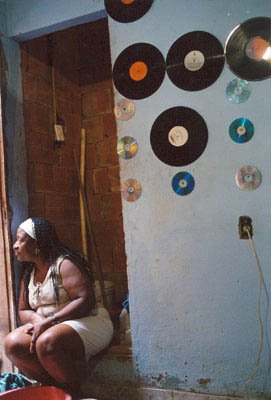
Evocative Photos of Rocinha by Brooklyn's own Gabriel Ponce de Leon (a great guy and good friend, I should note) were on display in Rio's subway and have been posted in the online mag no minimo. What's nice is that these are not bang bang, shoot shoot shots. They show the simple things of everyday life. There's also an interview with him (in Portuguese) here at viva favela.
The Super Powers of a Superpower
This article from the Financial Times detailing the European Union's list of 150 changes in Turkish governance that would be required for Turkey to join the EU reminded me of my time trucking around Istanbul's gecekondu (squatter) neighborhoods. It was after September 11, 2001 and during the ramp-up of rhetoric before the U.S. invasion of Iraq, and this is what I wrote at the time:
Istanbul, July 28, 2002—I’ve been here in the city of the sultans for almost three months, and America the superpower follows me wherever I go. You are American, people say. What do you think about September 11th?
I tell them all that I live in New York, that I stood on my roof and watched the Twin Towers fall. But that’s not what most people want to hear. They want theories, not facts. And regarding September 11th, the left, right and center all agree: It was an inside job.
To left-wingers, it was an act designed by the CIA to give America protective coloration for its imperialist doctrine of world domination. The U.S. is a superpower, my socialist friend Zamanhan tells me. Who else but the American intelligence services could fly a plane into the Pentagon, a building which has a defense system designed to shoot down anything that gets within three hundred meters of it (they have this system in Ankara, he notes, so how could they not have it at the Pentagon.) Besides, he adds, the U.S. covertly funded Osama Bin Laden and the Taliban when they were warring against Soviet occupation. Once an operative, always an operative: these were CIA agents at work.
The right believes it was economic at root: an act designed by the military to help rebuild the American economy by bolstering the war machine in the wake of the dot com collapse. The U.S. is a superpower, Mustafa, a soft-spoken fundamentalist who works for the municipal government in the deeply religious suburb of Sultanbeyli, tells me. How is it possible that this little group based in the mountains of Afghanistan could have penetrated America’s high tech air defense system? How is it possible they could have come and gone from the U.S. so freely. How could America not have known this was happening? It must have been planned by the military so that the government can spend billions and billions of dollars on new missiles.
And Ali, who is mostly moderate in his views, insists that the attack was engineered from within to give the U.S. a reason to invade Afghanistan, which he claims is strategically important because it gives the America a base of operations from which to control Asia, the Middle East, and even the former Soviet republics. The U.S. is a superpower, he tells me. It wants to control all these regions. And anyway, how could it not know immediately that four planes were hijacked and where they were heading? How could it not have shot them down? This was clearly an inside job.
Of course, some people also mention Israel. If the superpower didn’t do it, then its friends the crafty Israelis must have. The MOSSAD security service, they say, has the power to have made this happen, and is in league with the CIA anyway. What’s more, a fundamentalist friend added, everyone knows the Jewish ideology is for world domination and to make everyone else serve them.
In a conspiracy-laden world, the facts don’t matter—-and here’s my personal favorite, advanced by a very smart and sober man. I have read, he told me, that the World Trade Center was built by the Japanese and a rival firm wanted to prove that the technology used to build such skyscrapers could not withstand extreme heat. So it arranged this all to prove that the construction technology was unsafe.
Everywhere I go, I am America’s roving answer man. Why is America friends with Israel and not the Palestinians? Why does America want war with Iraq? Why are American cops always beating up black men? Why does America go around causing so much trouble in the world? Why does George Bush hate Muslims?
I remind myself that Istanbul was the capital of the world’s superpower 500 years ago. If a Turk had suddenly appeared in a working class area of London in the 16th century, it’s likely he would have been treated far more rudely than me and asked far more shocking questions.
Recently, I was sitting in the shade of a brick pile drinking tea with a group of ten or fifteen people—-family and friends who were recovering from a wedding that had taken place earlier in the week. We were silent for a while, and then a muscular man with a stylish goatee spoke up: What do you think about Turkey joining the European Union? I rejoiced: Finally, a political question that did not involve the U.S. and its super powers.
Tell me what you think, I said, because I think this is for the Turks and the Europeans to decide.
I think it’s a good thing, he said, but there’s one problem: I have heard that if we do join, America will seize Cyprus.
Why the hell would America want Cyprus? I asked.
He smiled and shook his head knowingly: America is a superpower, he said, and it will not let us do this without getting something in return.
Trading places
I've got a suggestion for the Zimbabwean judges who complain that they can't stop taking bribes to fix cases because they are starving and their lives are too hard: why don't you give your homes over to one of the many thousands of families who were made homeless a few months back by Operation Murambatsvina and try living on the street. Most magistrates are paid less than seven million Zimbabwe dollars ($270 US) a month, the Zimbabwe Observer reports. Hmmm. Most of my squatter friends in nearby Kenya lived on less than $40 a month. I'm sure the situation for hundreds of thousands of squatters in Zimbabwe is comparable. Each one of them would gladly trade places.
Tuesday, November 01, 2005
End of Tolerance?
What happened to end a generation of tolerance of the squats in Copenhagen and Geneve, asks writerPhilippe de Rougemont (article in French). In Geneva, the residents of Rhino, a well-regarded squat, are scheduled to leave their homes on Nov. 22nd. Christiania, the hippie squat that became a tourist attraction in Copenhagen, drawing a million visitors a year, is apparently slated to give way to luxury condos now that a law mandating the privatization of public property has gone into effect. With scant political clout and a dwindling sense of cooperative organizing, the squats lost public support and seem to have little ability to protect themselves from the wrath of tough prosecutors and local governments.
Monday, October 31, 2005
$9.2 million is enough to kill for
Orlando José Rodrigues, known as Soul, who was appointed to be Bem-Te-Vi's successor as chief of trafficking in Rocinha, lasted two days on the job before he was bumped off by two of his erstwhile colleagues, according to the latest news reports.
Here's why gang members are killing each other to get to the top: sales of cocaine in Rocinha bring in R$400,000 a week, the daily newspaper O Dia reports. At the current exchange rate, that's an annual turnover of $9.2 million.
Here are the details of Soul's assassination, in Portuguese:
Here's why gang members are killing each other to get to the top: sales of cocaine in Rocinha bring in R$400,000 a week, the daily newspaper O Dia reports. At the current exchange rate, that's an annual turnover of $9.2 million.
Here are the details of Soul's assassination, in Portuguese:
Sucessor de Bem-Te-Vi é assassinado na Rocinha
Agência Estado
Líderes comunitários da Rocinha informaram hoje à Polícia que o traficante Orlando José Rodrigues, o Soul, apontado como sucessor, na chefia do tráfico de drogas na favela, de Erismar Rodrigues Moreira, o Bem-Te-Vi, morto por policiais na madrugada de sábado, foi assassinado com outros quatro comparsas.
A ação, que integrantes da comunidade, em tom irônico, estão chamando de "golpe de Estado", teria sido comandada pelos bandidos conhecidos como Nem e Joca, que eram do bando de Soul e agora seriam os chefes do tráfico local.
A situação na Rocinha é de tranqüilidade, mas o ambiente ainda é de tensão. A Polícia ainda não subiu o morro para tentar localizar os corpos. Policiais do 23º BPM reforçam o patrulhamento dos acessos.
It takes getting used to
Here's something that people in Rocinha, and many of the other favelas of Brazil, have to get used to: kids with guns. These kids (photos provided by an anonymous favela resident) have handguns, but I saw many with assault weapons in my time in the favela.

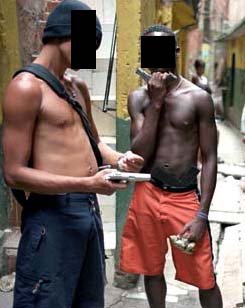
So far as I know, there are only a handful of favelas in Rio de Janeiro that are not strongholds of the drug trade. Some escape because they are small and out of the way in the jungle. And one large favela, Rio das Pedras, has its own vigilante posse that is as well armed as the dealers and metes out justice with as much brutality. The word is, if you get caught dealing drugs (or doing other anti-social activities) in Rio das Pedras, the posse will kill you. Quite a deterrent.
To be fair, the drug gangs lodged themselves in the favelas because the government refused to provide services. With no cops to interfere with their activities, the dealers became entrenched. They are also communitarian and invest in good things for the residents, including recreational space for kids, child care facilities, and parties. They also help resolve community disputes. One dealer, the former chief of trafficking in favela Dona Marta, above the legal neighborhood of Botafogo, claimed that he was only seeking to raise enough money to create an alternate government in the favela to run things more democratically and securely for the residents. Of course, he continued dealing, was later arrested, and died in jail, I believe.
Also to be fair: the residents of the favelas find the dealers infinitely preferable to the cops. The cops are corrupt. They harass the residents. They believe they have the right to burst into people's houses and trample their freedoms in ways they never would in the legal world. The second day I was in Rocinha, my friend Paul and I were accosted by the cops as we left the favela. We spent 15 or 20 minutes with guns pressed into our stomachs until Paul convinced the cops we were not traffickers or buyers. Rocinha residents go through this kind of harassment with much more regularity.
It also appears that as much as the cops fight the dealers, the drug gangs have connections to the highest echelons of society. A police officer I know, who I will call Jorge, told me that when raided the favelas, he often found caches of brand new weapons that seem to have come straight from the military. He suggested that the real chieftains of drug trafficking in Brazil were well-regarded military and political leaders of the country.
Finally, remember this: that as compelling as these images and stories are, the vast majority of favela residents are good people who are trying to provide for their families. It has been estimated that just one percent of the people who live in the favelas are involved in the drug trade.

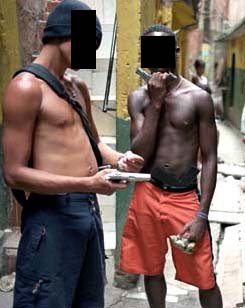
So far as I know, there are only a handful of favelas in Rio de Janeiro that are not strongholds of the drug trade. Some escape because they are small and out of the way in the jungle. And one large favela, Rio das Pedras, has its own vigilante posse that is as well armed as the dealers and metes out justice with as much brutality. The word is, if you get caught dealing drugs (or doing other anti-social activities) in Rio das Pedras, the posse will kill you. Quite a deterrent.
To be fair, the drug gangs lodged themselves in the favelas because the government refused to provide services. With no cops to interfere with their activities, the dealers became entrenched. They are also communitarian and invest in good things for the residents, including recreational space for kids, child care facilities, and parties. They also help resolve community disputes. One dealer, the former chief of trafficking in favela Dona Marta, above the legal neighborhood of Botafogo, claimed that he was only seeking to raise enough money to create an alternate government in the favela to run things more democratically and securely for the residents. Of course, he continued dealing, was later arrested, and died in jail, I believe.
Also to be fair: the residents of the favelas find the dealers infinitely preferable to the cops. The cops are corrupt. They harass the residents. They believe they have the right to burst into people's houses and trample their freedoms in ways they never would in the legal world. The second day I was in Rocinha, my friend Paul and I were accosted by the cops as we left the favela. We spent 15 or 20 minutes with guns pressed into our stomachs until Paul convinced the cops we were not traffickers or buyers. Rocinha residents go through this kind of harassment with much more regularity.
It also appears that as much as the cops fight the dealers, the drug gangs have connections to the highest echelons of society. A police officer I know, who I will call Jorge, told me that when raided the favelas, he often found caches of brand new weapons that seem to have come straight from the military. He suggested that the real chieftains of drug trafficking in Brazil were well-regarded military and political leaders of the country.
Finally, remember this: that as compelling as these images and stories are, the vast majority of favela residents are good people who are trying to provide for their families. It has been estimated that just one percent of the people who live in the favelas are involved in the drug trade.
Sunday, October 30, 2005
Death of a Drug Dealer


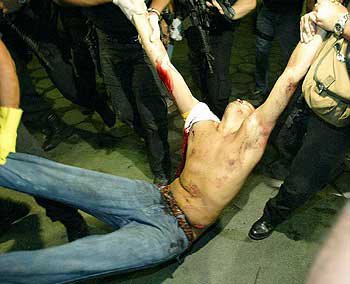
Bem-Te-Vi (real name Erismar Rodrigues Moreira), the chief of trafficking in Rocinha, was killed by the police on Saturday. He was shot four times at the end of an hour-long shootout in the Rocinha neighborhood called Valão. Four other favela residents, including three innocent bystanders who just happened to be in the area and had no connection to the drug kingpin, were wounded in the melee.
The person who sent me the news had an interesting reaction to the shooting. "This guy was a very bad guy," he wrote, but added that he is angry at the police for storming the favela and wounding innocents: "I do not like trafickers, but as usual, people who are not bad get injured or killed. I love Rocinha and hate the police."
The photos here, taken by a different Rocinha resident, show the tension in Rocinha. Note the kid in the second photo, walking down the beco (or pathway), seemingly oblivious to the heavily armed masked policeman staked out just around the corner.
***
Bem-Te-Vi foi morto com 4 tiros
Agência Estado
Chefe do tráfico na Rocinha, o bandido mais procurado
do Rio, Erismar Rodrigues Moreira, o Bem-Te-Vi, de 29
anos, foi morto na madrugada de hoje, dentro da
favela, na zona sul, em uma troca de tiros com a
polícia. Conhecido pela vaidade, que o levou a ter
armas, cordões e pulseiras banhadas a ouro, e pelos
contatos com jogadores de futebol, ele foi baleado
durante a operação Cavalo de Tróia. Três moradores
também foram atingidos, e uma quarta pessoa, que,
segundo a polícia, é integrante da quadrilha do
traficante, morreu.
Bem-Te-Vi resistiu à prisão e foi morto às 3h, após
uma hora de confronto, acossado nas proximidades do
valão do Largo do Boiadeiro, na parte baixa da favela,
informou a polícia. Ele estava acompanhado por seis
traficantes armados de fuzil. Os criminosos usaram
granadas contra 10 policiais da 25ª DP (Engenho de
Dentro), que estavam na linha de frente da operação.
Na reação, quatro tiros foram dados no bandido - um na
cabeça, dois no abdômen e outro entre o tornozelo e o
pé - que tinha ainda vários ferimentos na parte
direita do abdômen. De acordo com o Instituto
Médico-Legal (IML), a pistola Glock 9mm dourada, que
estava na cintura do bandido, foi alvejada, e o
gatilho acabou entrando no abdômen. Além da arma, ele
trazia um bracelete de ouro.
Durante o tiroteio, o túnel Zuzu Angel, que liga a
zona sul à Barra, na zona oeste, permaneceu fechado e
às escuras, assustando motoristas. Moradores da
comunidade também viveram momentos de muita tensão. O
coordenador da operação, delegado Luiz Antonio
Ferreira, da 25ª DP, contou que nunca viu tantos
disparos na vida. Acionado para retirar o traficante e
os policias da favela, o carro blindado da
Coordenadoria de Operações e Recursos Especiais (Core)
levou 40 minutos para sair do local, devido à intensa
troca de tiros.
***
Here is an Estadao article, in Portuguese, about his burial. The article notes that residents expect more violence in the favela.
warning: if you don't want to look at a disturbing image, of Bem-Te-Vi's body being unceremoniously hauled out of the favela by the cops, don't read on.
Saturday, October 29, 2005
Many Indian politicians are squatters
Amazing but true: some of India's toniest politicians and stars are squatters, according to this article from gulfnews. The list of illegal occupants include Bihar Governor Buta Singh, Communist Party (Marxist) leader Harkishen Singh Surjeet, senior Bharatiya Janata Party leader Jaswant Singh, Uttar Pradesh Chief Minister Mulayam Singh Yadav, artist Jatin Das, Kathak dancer Birju Maharaj, Bharatnatyam exponent Leela Samson and Kuchipudi dancers Raja and Radha Reddy. They all seem to be occupying government-owned houses that are far beyond what they are entitled to under law. Left and right are implicated in the scandal--and although it is the sad norm in India, it is a scandal. By what right do politicians push out the poor, while preserving their own illegal percs.
70 favelas at risk in Rio
Vila Alice, a small favela nestled in the hills above middle class Larangeiras is now at risk of eviction after a 12-year-long fight over land rights with a nearby highrise development, The Guardian reports.
"Fourteen shantytowns, the majority in upper-class boroughs such as Gávea and Jardim Botânico, were recently earmarked for removal by Rio's public prosecutor, while there has been a recent jump in the number of legal battles" over favelas, the newspaper reports. The official reasons for the evictions vary from ownership disputes to attempts to protect the environment and concerns over the safety of those living in the hilltop favelas. But for those fighting removal, the motivation is simple. "It isn't about land or trees or anything like that. They don't want the poor close to them," said Sebastião Machado, 47, a community activist and odd-job man involved in the battle for Vila Alice."
Indeed, if we're talking environmental concerns, the wealthy mansions of Larangeiras are just as destructive of the environment as the small but cozy homes of the poor. And if the risk of landslide is the issue, only the homes directly impacted by this should be relocated.
Several politicians in favor of eviction want the favelados moved further out of town. But favela dwellers and their allies dismiss this as pushing the problem away.
"People are confusing the issue of violence and the issue of favelas. The middle class are scared of the violence but it's not removal that will solve this. In the past ... removal has only helped change the address of this problem," Ricardo Gouvêa, an architect and human rights campaigner from the Bento Rubião Foundation told the Guardian. He cited the example of the Catacumba favela, whose expelled residents went on to form the Complexo da Maré, a sprawling slum near Rio's airport often referred to as the "Gaza Strip" because of its high death rate. "In the 1960s more than 100,000 families were brutally removed and this didn't solve the problem," he said.
The battle over Vila Alice culminates Nov. 8th and is extremely important. José Nerson de Oliveira, vice-president of the Federation of Favelas in Rio de Janeiro, told the Guardian that as many as 70 communities could be at risk.
Vila Alice occupies a chunk of land owned by the nearby highrise. Does anyone believe that this is anything but a real estate grab? And won't Brazil's recently enacted City Statute protect the residents?
How many times do we have to say it: eviction is not the answer, no matter how much political and legal swat rich people can muster. It's time for a dialogue between communities, designed to ensure that they can live together, and share the space in the city.
"Fourteen shantytowns, the majority in upper-class boroughs such as Gávea and Jardim Botânico, were recently earmarked for removal by Rio's public prosecutor, while there has been a recent jump in the number of legal battles" over favelas, the newspaper reports. The official reasons for the evictions vary from ownership disputes to attempts to protect the environment and concerns over the safety of those living in the hilltop favelas. But for those fighting removal, the motivation is simple. "It isn't about land or trees or anything like that. They don't want the poor close to them," said Sebastião Machado, 47, a community activist and odd-job man involved in the battle for Vila Alice."
Indeed, if we're talking environmental concerns, the wealthy mansions of Larangeiras are just as destructive of the environment as the small but cozy homes of the poor. And if the risk of landslide is the issue, only the homes directly impacted by this should be relocated.
Several politicians in favor of eviction want the favelados moved further out of town. But favela dwellers and their allies dismiss this as pushing the problem away.
"People are confusing the issue of violence and the issue of favelas. The middle class are scared of the violence but it's not removal that will solve this. In the past ... removal has only helped change the address of this problem," Ricardo Gouvêa, an architect and human rights campaigner from the Bento Rubião Foundation told the Guardian. He cited the example of the Catacumba favela, whose expelled residents went on to form the Complexo da Maré, a sprawling slum near Rio's airport often referred to as the "Gaza Strip" because of its high death rate. "In the 1960s more than 100,000 families were brutally removed and this didn't solve the problem," he said.
The battle over Vila Alice culminates Nov. 8th and is extremely important. José Nerson de Oliveira, vice-president of the Federation of Favelas in Rio de Janeiro, told the Guardian that as many as 70 communities could be at risk.
Vila Alice occupies a chunk of land owned by the nearby highrise. Does anyone believe that this is anything but a real estate grab? And won't Brazil's recently enacted City Statute protect the residents?
How many times do we have to say it: eviction is not the answer, no matter how much political and legal swat rich people can muster. It's time for a dialogue between communities, designed to ensure that they can live together, and share the space in the city.
Another thought on evictions
Here's something for the United Nations to think about: how to penalize nations that allow squatter communities to be evicted. There will be no let-up in drives against squatters if municipalities and countries don't face dire consequences. The well-meaning world body does all sorts of after-the-fact reports detailing the human suffering and misery that comes with eviction and demolition. For once let's try getting out in front of this issue and preventing evictions rather than simply cataloguing them.
Friday, October 28, 2005

To go along with jj's photo, here's one of mine, of the tufts of rebar that energize the built forms of Rocinha. It's not widely known, but there's a vast commercial marketplace in most squatter communities. The sign at left, cut off in the photo, is advertising a kitchenette apartment for rent. And, of course, there's always coca cola in the favela.
City of water tanks
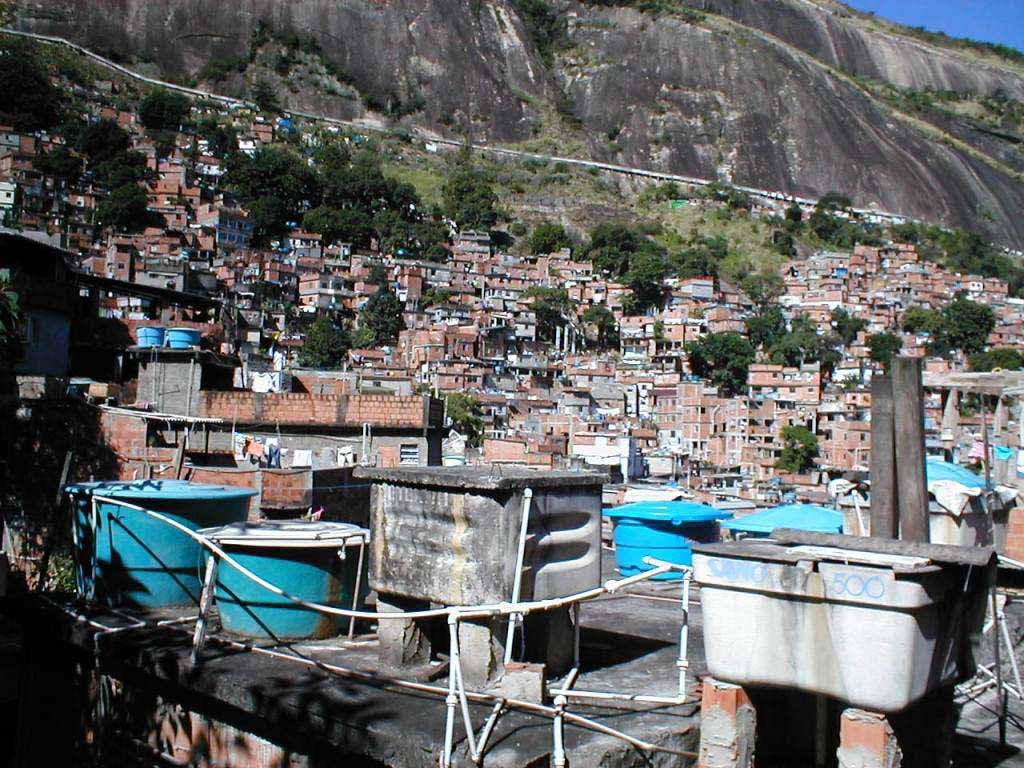
This photo, taken by jj, a correspondent who was born and raised in Rocinha, shows a forest of caixas d'agua--water tanks--on the rooftops of Rocinha. Jj is 19, and is studying English and teaching ju jitsu in the favela. He likes Rocinha, and says that he once tried to live in the ritzy Barra da Tijuca, but found that people there were not friendly once they found out he was from Rocinha.
Of Rocinha's reputation as a dangerous place, he says: "I think we have 300,000 people and maybe only 200 are they very bad ones....We in Rocinha make very little money. We do not buy the drugs." The drug dealers, he says, cater to middle class/rich people. If these outsiders stopped buying, the traffickers would be out of work.
He also notes something that I have written about: that the drug dealers invest in the community. The police are much more disruptive, and do not distinguish between law abiding residents and dealers. "We favelados do not like the police. They come in shooting everybody and innocents get killed. The traficantes, we understand, are doing bad things, but not to us."
Thanks, jj. Please keep us posted on daily life in Rocinha.
Business Development for Cairo's squatters
A project training women in Cairo's squatter areas so they can get jobs claims impressive results, the Mail & Guardian Online reports.
Did Squatters spike the cars?
After the demolition of five squatter shanties not far from Talisay City in the Philippines, nails were strewn across a local highway, disabling 15 cars, The Freeman reports. The newspaper doesn't know if it's the work of disgruntled squatters.
Tomb Raiders
A small squatter encampment is threatening a World Heritage Site in Peru, Reuters reports. A few dozen squatter families have erected wood and straw huts on the edge of the Nazca lines, a little-known but vast area 400 km south of Lima. where enigmatic shapes and lines, stylised figures of birds and animals were etched in the desert 2000 years ago.
"Look around: ... it's full of excrement, rubbish, (old) signs of looting," said Maximiliano Tenorio, one of the new squatters.
Though the new settlement is far from the best of the Nazca drawings, archeologists fear that squatter homes will spread unless people are evicted.
If the government wants to protect the Nazca lines (which have periodically been chopped up by legal development and destroyed by tomb raiders), it will have to negotiate with the squatters to provide land and infrastructure elsewhere. As in Turkey and Brazil, when governments negotiate in good faith, the squatters themselves police their boundaries and prevent further encroachments on ecologically or culturally sensitive parcels.
"Look around: ... it's full of excrement, rubbish, (old) signs of looting," said Maximiliano Tenorio, one of the new squatters.
Though the new settlement is far from the best of the Nazca drawings, archeologists fear that squatter homes will spread unless people are evicted.
If the government wants to protect the Nazca lines (which have periodically been chopped up by legal development and destroyed by tomb raiders), it will have to negotiate with the squatters to provide land and infrastructure elsewhere. As in Turkey and Brazil, when governments negotiate in good faith, the squatters themselves police their boundaries and prevent further encroachments on ecologically or culturally sensitive parcels.
Thursday, October 27, 2005
Where are the hooligans when you need them
Squatters in Jo-burg will likely be evicted in a plan to clean up downtown in time for the 2010 Football World Cup, Reuters reports, via the Pakistani paper DAWN.
"City officials hope that by the time the world's gaze rests on Johannesburg for the 2010 World Cup, squats will have been replaced by upmarket loft apartments, smart delis and trendy boutiques."
Call it the globalization of desire. Even under ANC rule.
"City officials hope that by the time the world's gaze rests on Johannesburg for the 2010 World Cup, squats will have been replaced by upmarket loft apartments, smart delis and trendy boutiques."
Call it the globalization of desire. Even under ANC rule.
Hire squatters to build new housing
Here's a plan so sensible it's amazing no one's thought of it before: One South African municipality plans to hire squatters who are being evicted to build their new homes in a new township, News24 reports.
Beyond the Upscale
While squatters in the developed world used to be people with means who were making a political and alternative statement, The Guardian reports that this is changing. Now, squatters in the UK and elsewhere are from other countries, economic refugees, priced out of the housing market in the increasingly pricey cities of the west.
High Court Orders Squatter Eviction in Delhi
A Delhi Court has ruled that the city must remove squatters from public lands, expressIndia reports. Of course, the judges didn't express any worry about where the squatters will go. It's the old cliche: out of sight, out of mind. Pitiful.
The judges seem to blame the squatters for the mess. If it's true, as they wrote, that "this kind of encroachment develops into a nexus between various wings of authority as these illegal encroachers are allowed to stay in permanent poverty only as they serve as vote-banks,’’ then the solution is to prosecute politicians for corruption, not to blame the squatters, who are simply doing what they have to do to get shelter.
The judges seem to blame the squatters for the mess. If it's true, as they wrote, that "this kind of encroachment develops into a nexus between various wings of authority as these illegal encroachers are allowed to stay in permanent poverty only as they serve as vote-banks,’’ then the solution is to prosecute politicians for corruption, not to blame the squatters, who are simply doing what they have to do to get shelter.
Baghdad Squatters: No homeland in their own land
Here's what democracy has meant for many Iraqis: evictions and rising rents. This Washington Post article describes the problem: "After the [U.S.] invasion, landlords across Iraq seized the opportunity to increase rents and force out people who could not pay. Within weeks, thousands of suddenly homeless families had started looking for abandoned buildings."
The government has vowed to give these squatters the boot, but has delayed implementation of the rule until after elections in December. "Once the government becomes strong, these squatters will be forced out," Mohammed Hareeri, spokesman for the Housing and Reconstruction Ministry, told the Post.
As Sajida Abboud, an elementary school teacher who has been squatting in a former government building for the past 2 1/2 years, said: "We are really lost. We need a homeland. We are without a homeland."
Without a homeland in their own land. What could be more eloquent.
[thanks to Annia for the article link]
The government has vowed to give these squatters the boot, but has delayed implementation of the rule until after elections in December. "Once the government becomes strong, these squatters will be forced out," Mohammed Hareeri, spokesman for the Housing and Reconstruction Ministry, told the Post.
As Sajida Abboud, an elementary school teacher who has been squatting in a former government building for the past 2 1/2 years, said: "We are really lost. We need a homeland. We are without a homeland."
Without a homeland in their own land. What could be more eloquent.
[thanks to Annia for the article link]
Monday, October 24, 2005
No gun ban in Brazil
Despite 36,000 shooting deaths last year, Brazil's voters have strongly rejected a proposed ban on guns Reuters reports. All areas of the country voted against the ban. Here's the vote breakdown by region (note: in the upside-down world of referendums, a yes vote was a vote against guns, and a no vote was a vote to keep them.)
Commentators have explained the vote by suggesting that Brazilians didn't trust the authorities to be able to disarm entreched mafias and drug gangs, and believed that a gun ban would leave them more exposed to violence. Indeed, one of the shortcomings of the proposal was that it would not have covered guns purchased before the ban went into effect, which in a way would have legitimized the vast cache of arms held by clandestine drug gangs.
The ban would have halted sales of guns and ammunition to the public. But since drug gangs often get their weapons through illegal conduits, including ties to the military, the ban probably wouldn't have affected their ability to get assault rifles and other heavy arms.
Brazil second in the world behind Venezuela in per capita gun deaths, with 22 for every 100,000 people.
So the spiraling violence will continue: indeed, on Saturday night, a young girl in Rio de Janeiro's favela Morro do Dende was wounded by a stray bullet as police clashed with drug traffickers.
Commentators have explained the vote by suggesting that Brazilians didn't trust the authorities to be able to disarm entreched mafias and drug gangs, and believed that a gun ban would leave them more exposed to violence. Indeed, one of the shortcomings of the proposal was that it would not have covered guns purchased before the ban went into effect, which in a way would have legitimized the vast cache of arms held by clandestine drug gangs.
The ban would have halted sales of guns and ammunition to the public. But since drug gangs often get their weapons through illegal conduits, including ties to the military, the ban probably wouldn't have affected their ability to get assault rifles and other heavy arms.
Brazil second in the world behind Venezuela in per capita gun deaths, with 22 for every 100,000 people.
So the spiraling violence will continue: indeed, on Saturday night, a young girl in Rio de Janeiro's favela Morro do Dende was wounded by a stray bullet as police clashed with drug traffickers.
Looking Backward for a Way Forward in New Orleans
Almost unknown in the U.S., the ancient Roman legal concept of usufruct might help save New Orleans, The Los Angeles Times reports.
"You are not going to rebuild New Orleans unless you are able to get government access to private property," Mtumishi St. Julien, a longtime community advocate and housing advisor to Mayor C. Ray Nagin, told the paper. "If government does not solve that problem, everything else is just talk. It is foolish to believe otherwise."
As this backgrounder discusses, usufruct involves the ability to use, invest in and profit from property belonging to another. The holder of a usufruct right must return the property to the owner in at least as good condition as it was initially. And the usufruct right can be used to get a mortgage. A potential drawback: the usufruct right can also be bought and sold.
Still, this is a novel way of thinking about rebuilding the city, and would give the New Orleans government some important control over the future of the city. The key question: how to involve the current owners and, most importantly, the mass of city people who had no ownership right whatsoever. Tenants have a stake in the city, too, and must be involved in all decisions involving neighborhoods.
Memo to community organizations active in New Orleans: now's the time to speak up and organize for real.
note: without the University of Pittsburgh's Jurist clippings service, I probably wouldn't have found this story.
"You are not going to rebuild New Orleans unless you are able to get government access to private property," Mtumishi St. Julien, a longtime community advocate and housing advisor to Mayor C. Ray Nagin, told the paper. "If government does not solve that problem, everything else is just talk. It is foolish to believe otherwise."
As this backgrounder discusses, usufruct involves the ability to use, invest in and profit from property belonging to another. The holder of a usufruct right must return the property to the owner in at least as good condition as it was initially. And the usufruct right can be used to get a mortgage. A potential drawback: the usufruct right can also be bought and sold.
Still, this is a novel way of thinking about rebuilding the city, and would give the New Orleans government some important control over the future of the city. The key question: how to involve the current owners and, most importantly, the mass of city people who had no ownership right whatsoever. Tenants have a stake in the city, too, and must be involved in all decisions involving neighborhoods.
Memo to community organizations active in New Orleans: now's the time to speak up and organize for real.
note: without the University of Pittsburgh's Jurist clippings service, I probably wouldn't have found this story.
Saturday, October 22, 2005
Squatter Activism in Switzerland
Squatters in Rhino, a squatter-led building in Geneva, are vowing to defy a judge's eviction order, the swissinfo news service reports. The squatters argue that eviction would be inhumane because it would put 60 adults and ten kids into the street during the winter.
I visited Rhino when I was in Switzerland back in April and it was an incredibly organized and communal and exciting building. the squatters have occupied it for almost two decades, and if they are pushed out, it would surely be transformed into luxury housing.
Seems like a no-brainer: there's no good reason to evict the squatttes.
I visited Rhino when I was in Switzerland back in April and it was an incredibly organized and communal and exciting building. the squatters have occupied it for almost two decades, and if they are pushed out, it would surely be transformed into luxury housing.
Seems like a no-brainer: there's no good reason to evict the squatttes.
Anti-property.... a good idea
Check out this BBC article on a great new strategy to create housing and avoid abandonment being premiered in Britain: Britain's Deputy Prime Minister's office has floated a plan that would enable local authorities to move families into buildings that have stood vacant for a year and to hold them for more than seven years before returning them to their owners. See also this story from: The Mirror.
Tuesday, October 18, 2005
Burn out the squatters!!
That's what former residents of District 6 in Cape Town are threatening to do now that the South African government has relocated 30 families to a plot in the area, the Cape Times reports. District 6 has a grand and notable history. It was one of the few multi-ethnic and multi-racial areas in the country (see history here) and faced years of sporadic forced removals. But things accelerated after the passage of the Group Areas Act, which made it illegal for people of different races to live in the same neighborhood. In 1966, the apartheid government declared District 6 a 'whites only' area. Between 1966 and 1980 60,000 people were forcibly removed from the district and their houses and shops bulldozed to the ground. Today, many of the original residents and their descendants, have petitioned to get their homes back, and they are worried that the squatters will now gain a competing claim to the land. Seems like there's got to be room for both in a renewed District Six. After all, isn't that what the spirit of the neighborhood was all about.
Monday, October 17, 2005
A Paris Bidonville
From BBC NEWS, a photo essay on a tent city established by African immigrants who were evicted from various squatted buildings in Paris. With winter approaching, the families have now accepted temporary housing in a short-stay facility where each family only has 120 square feet.
Saturday, October 15, 2005
A New Book on Caracas
It's rare to find architects who are willing to listen to and learn from squatter communities. Alfredo Brillembourg and Hubert Klumpner, two of the driving forces behind the Caracas Think Tank in Caracas, Venezuela, have spent the past six months working with squatters in the Venezuelan capital. Now they have joined with German journalist Kristin Feireiss to bring out informal city: caracas case (Prestel Art Books.)
For planners this is an important text. As Brillembourg and Klumpner write: "If one looks at the barrios at a distance--in person or in an aerial photograph--one sees sprawling, rhizome-like shapes; one searches in vain for an ordering principle." But, they assert, we can learn from the informal city. "Informal does not mean 'lacking form'. It implies, for us, something that arises from within itself and its makers, whose form has not yet been recognized, or is unfinished, but which is subject to rules and procedures potentially as specific and necessary as those that have governed official, formal city-making."
It's expensive ($60) and largely academic in tone, but informal city is enlivened with lots of photos and it makes the right argument: that squatters have made a valuable contribution to urbanism in the 21st century.
For planners this is an important text. As Brillembourg and Klumpner write: "If one looks at the barrios at a distance--in person or in an aerial photograph--one sees sprawling, rhizome-like shapes; one searches in vain for an ordering principle." But, they assert, we can learn from the informal city. "Informal does not mean 'lacking form'. It implies, for us, something that arises from within itself and its makers, whose form has not yet been recognized, or is unfinished, but which is subject to rules and procedures potentially as specific and necessary as those that have governed official, formal city-making."
It's expensive ($60) and largely academic in tone, but informal city is enlivened with lots of photos and it makes the right argument: that squatters have made a valuable contribution to urbanism in the 21st century.
Indian architect works with squatters
Pratima Joshi runs Shelter, an NGO in Pune, India, which encourages squatters to organize. The result: they think for themselves. "Some slums wanted sanitation, others wanted water. If they were by the river bed or in difficult terrain, they opted for housing," says Joshi, an architect by training. BBC NEWS has more details.
London Squatter Gets Security
Harry Hallowes, who for 19 years has been living on London's Hampstead Heath, now has security of tenure. In a deal between a property development company and the Camden Council, Hallowes will be allowed to remain on the heath in hsi cozy 12ft by 8ft shack, plus a 90ft by 90ft back garden.
The Independent reports that the deal will also save a portion of the development site as a nature reserve.
The Independent reports that the deal will also save a portion of the development site as a nature reserve.
The Japanese Get It
Yukitoshi Nagashima, a Japanese architecture student, decided to do his thesis on the architecture of the homeless. He discovered a whole world of nuance in their crude encampmants. He has now published a book: "Danboru House" (Cardboard box houses), put out last month by Poplar Publishing. And his years among the homeless resulted in a personal life change too: he's become a newspaper reporter. Asahi Shimbun reports.
Saturday, October 08, 2005
Squatter Demolitions in Sudan
The government of Khartoum embarks on regular "replanning operations" to drive squatters and refugees from the war-torn southern region out of the capital. Last December, police destroyed a squatter encampment close to the city and relocated 12,000 people to a desolate desert 55 km out of town. In August, after some families moved back, police again destroyed their homes. "This is the sixth time that my house has been destroyed since the late nineties," a woman who declined to be named told IRIN News. "I lost everything apart from some clothes." Estimates are that in the past two years, 300,000 people have been forced out of Khartoum through these violent evictions.
Thursday, October 06, 2005
A Law Professor Endorses Squatters Rights
Bernadette Atuahene, Assistant Professor at the Chicago-Kent College of Law, thinks squatters have rights. She outlines her thoughts in this brief article in the South Africa newspaper Business Day.
Wednesday, October 05, 2005
Favela Rising
Afro-Reggae, a wonderful grassroots movement straight from Rio's tough Zona Norte favelas, uses music & dance to build social transformation. The group was profiled in a recent documentary, 'Favela Rising,' which won the best new documentary filmmaker prize at this year's Tribeca Film Festival. Now, The Hollywood Reporter has announced, the film has a U.S. distribution contract, too. So it should be in theaters next year, courtesy of ThinkFilm and HBO/Cinemax. Check it out when it comes to your town.
Well, the Right Certainly Won't Do It...
...so the left has to: take up the issue of forced eviction of squatters with Sonia Gandhi, head of India's ruling Congress Party. The Statesman offers a short report.
Food For Junk, Food for Thought
AP via The Seattle Times: Hugo Chavez has figured out a way to interact with Venezuela's squatters--offer them food in return for garbage. Of course, it's political influence peddling at its most naked. But it's also not a bad deal. Who could complain if politicos in Kenya did this in their campaign fight over the proposed new constitution, which seems likely to fracture the already fractious governing coalition (see this article from the East African Standard.)
Tuesday, October 04, 2005
Brainstorm - How Shantytowns Become Real Cities - FORTUNE
Here's my latest piece on squatters, from Fortune Magazine, pointing out the energy and entrepreneurial spirit in the world's shantytowns. Check out the print version for a bunch of my photos of the communities I lived in.
Scoop: UN declares evictions are not the answer
Well, now the UN has said it: Evictions are not the answer to the growth of squatter communities and shantytowns. "Evictions and demolitions are not the answer to the challenges of rapid urbanization," Secretary General Kofi Annan said. "We must have pro-poor, participatory urban development in which women and men are empowered to manage their communities."
Amen. Now do it!
Amen. Now do it!
Zim blitz 'pre-emptive'
A government-controlled newspaper in Zimbabwe has printed an article admitting that the massive drive against squatters over the summer was politically motivated. The Zimbabwe Herald ran an article from the October issue of New African magazine, asserting that the entire anti-squatter "operation was the brainchild of Zimbabwe's intelligence community," which feared that the squatters and illegal merchants were about to engage in a Ukraine-style mass demonstration against Zimbabwen President Robert Mugabe. The article also asserted that officials have admitted that some of the items in a highly critical UN report on the demolitions were justified, and that security forces were excessively brutal. The Herald also reports that illegal vendors have begun to return to the cities, and that police have arrested more than 14,000 people over the past two weeks.
Sounds Big, But Is It?
The East African Standard reports that the Kenyan government will spend "a whopping Sh880 billion [approximately $11 billion] to upgrade all slums and informal settlements in the country." This could be a great thing, if done right. But financing and exact plans for improving the shantytowns and squatter areas are sketchy. A long-planned effort to upgrade a tiny sliver of Kibera has taken three years already and no housing has yet been built. It's still unclear who will live in the new buildings, who will own the new housing, and whether everyone in the affected community, called Soweto Village, will gain. That doesn't bode well for the proposal.
Also, Kenyan President Mwai Kibaki faces a political crisis over his planned new consititution (his proposal would enable him to continue to hold tremendous centralized power) and one of his most powerful allies, Roads Minister Raila Odinga, who represents Kibera in Parliament, has announced that he will run against Kibaki in the next Presidential contest. So this could just be a political promise, with no real weight behind it.
But we can hope it's real, and done right, with democratic participation and decision-making by the squatters.
Also, Kenyan President Mwai Kibaki faces a political crisis over his planned new consititution (his proposal would enable him to continue to hold tremendous centralized power) and one of his most powerful allies, Roads Minister Raila Odinga, who represents Kibera in Parliament, has announced that he will run against Kibaki in the next Presidential contest. So this could just be a political promise, with no real weight behind it.
But we can hope it's real, and done right, with democratic participation and decision-making by the squatters.
Africans in Paris left on the street
Reuters, via the Pakistani newspaper DAWN reports that some African squatters in Paris have refused to leave the streets after being evicted from their homes following several fatal fires. But the fires were not set by the squatters and they are now left with no place to live. "We are the ones who get up in the mornings to work in buildings," one squatter told the news agency. "It's African women cleaning up the mess of politicians in their offices in the morning. And at night, we come back to our derelict homes."
In India, No Room at the Inn
Homeless? Who cares? That's the attitude of Delhi's high court in rebuffing squatters attempts to avoid the bulldozers, The Times of India reports. The squatters had argued that it was unconscionable and illegal that bulldozers arrived with no notice. But the court ruled that demolitions with no warning were the right thing, and that property rights should trump human rights: "Show us any document which gives you the right to live on that piece of land. Are you a tenant? The question is, what is your entitlement to occupy that land?" [fact check item: though I don't know the specifics of this case, I do know that most squatters in India do pay some form of ground rent to the government. So they are, in a way, tenants.]
Tanzania Shows The Way
Tanzania discloses that about 2/3 of the people living in its cities are living illegally, many of them as squatters. But Lands Minister Gideon Cheyo vowed that the country was embarking on an ambitious plan to provide security of tenure to everyone, regardless of the legality of their land holding. "We are in the process of formalisation of land [and] housing in unplanned areas," he said. "The aim of the programme is to officially recognise such property and finally create security of tenure." He told IRIN Africa that more than half the homes in Dar es Salaam have been registered. With security of tenure, people will improve their communities, over time, as they have the money. And they feel more right to organize to demand public services such as water, electricity and sewers.
Sunday, October 02, 2005
Monsters of the Moment
I'm playing catch-up with some things I missed over the past few months.
1. The Guaridan's John Vidal blasted the west for demonizing Robert Mugabe. A bunch of letters blasted him back.
2. Also, a new study by James Tooley, of Newcastle University (you can download it here) purports to show that poor people in the 3rd world are increasingly chosing private schools over public schools--and criticizes the UN for pushing for universal free primary education by 2015.
Here's something from his press release: Where the “success” of free primary education (FPE) is celebrated, as in Kenya, which introduced FPE in 2003, the research shows that the reported increase in enrolment is, at best, children moving from private slum schools – forced to close – to overcrowded state schools. “That’s not a success story, it’s a disaster," adds Prof Tooley.
I visited many of the private schools in Kibera, Nairobi's largest shantytown, and many of them were little more than overcrowded warehouses for kids and big money-makers for their owners. Public education is not perfect, certainly. I was in Kibera at the time free public education was insituted, and I didn't many parents who preferred to send their kids to private schools. The biggest problem was that the public schools didn't have capacity for all the kids from Kibera. It would have been good to see the best of the 'slum schools' integrated into the public education system. But I doubt that has happened, and I'd bet many slum schools, most of which are woefully overcrowded and short of textbooks and supplies, are still profiteering off of desperate parents.
1. The Guaridan's John Vidal blasted the west for demonizing Robert Mugabe. A bunch of letters blasted him back.
2. Also, a new study by James Tooley, of Newcastle University (you can download it here) purports to show that poor people in the 3rd world are increasingly chosing private schools over public schools--and criticizes the UN for pushing for universal free primary education by 2015.
Here's something from his press release: Where the “success” of free primary education (FPE) is celebrated, as in Kenya, which introduced FPE in 2003, the research shows that the reported increase in enrolment is, at best, children moving from private slum schools – forced to close – to overcrowded state schools. “That’s not a success story, it’s a disaster," adds Prof Tooley.
I visited many of the private schools in Kibera, Nairobi's largest shantytown, and many of them were little more than overcrowded warehouses for kids and big money-makers for their owners. Public education is not perfect, certainly. I was in Kibera at the time free public education was insituted, and I didn't many parents who preferred to send their kids to private schools. The biggest problem was that the public schools didn't have capacity for all the kids from Kibera. It would have been good to see the best of the 'slum schools' integrated into the public education system. But I doubt that has happened, and I'd bet many slum schools, most of which are woefully overcrowded and short of textbooks and supplies, are still profiteering off of desperate parents.
Thursday, September 22, 2005
Violence as Women Protest in Zimbabwe
At long last, have they no sense of decency? Now, Zimbabwe's government spawns violence against women protesting the evictions that pushed 700,000 out of the country's two main cities.
More Squatter Evictions in Paris
French authorities have evicted dozens of squatters from a new group of buildings they said were unsafe. They promised that they would demolish three of the buildings in the Parisian suburb of Clichy-sous-Bois (Seine-Saint-Denis) and build 559 units of affordable housing on the site. Here's a news story, in French, fromLe Figaro.
Evicting many for the crimes of a few
More on the evictions of hundreds of families from a building in Johannesburg:
Police break down doors in massive crackdown
Foul hellhole is what hundreds called home
Important portions from the first article:
Portia Mashilo, who stood outside the building with her newborn baby, complained about the way the police had rudely woken her up. "This reminds me of apartheid, when the police just used to force their way into our homes. Now, even in democracy, they are doing the same thing. It is not right," Mashilo said.
But [police inspector] Naidoo said police had been compelled to act against "bad buildings" because intelligence showed that Hillbrow was the nerve centre for most crimes committed in and around Johannesburg. "We have more than 30 different nationalities living in Hillbrow and there is a major market for stolen goods, because many of these people cannot buy anything on hire purchase," Naidoo said.
"Most of the crimes committed are done out of buildings like this, and that is why we are coming down hard on such places."
My questions:
why are the police simply evicting people without rehousing them?
why isn't the South African government doing enough about the housing crisis?
why arrest the illegal immigrants (it's not at all clear that they're all criminals)?
why evict the many for the crimes of the few?
Police break down doors in massive crackdown
Foul hellhole is what hundreds called home
Important portions from the first article:
Portia Mashilo, who stood outside the building with her newborn baby, complained about the way the police had rudely woken her up. "This reminds me of apartheid, when the police just used to force their way into our homes. Now, even in democracy, they are doing the same thing. It is not right," Mashilo said.
But [police inspector] Naidoo said police had been compelled to act against "bad buildings" because intelligence showed that Hillbrow was the nerve centre for most crimes committed in and around Johannesburg. "We have more than 30 different nationalities living in Hillbrow and there is a major market for stolen goods, because many of these people cannot buy anything on hire purchase," Naidoo said.
"Most of the crimes committed are done out of buildings like this, and that is why we are coming down hard on such places."
My questions:
why are the police simply evicting people without rehousing them?
why isn't the South African government doing enough about the housing crisis?
why arrest the illegal immigrants (it's not at all clear that they're all criminals)?
why evict the many for the crimes of the few?
Tuesday, September 20, 2005
Evictions in South Africa
Security forces in South Africa have forcibly evicted 300 residents from two housing complexes in Johannesburg, arguing that the buildings were unsafe, the Mail & Guardian reports. Authorities said they arrested 90 illegal immigrants and six people with criminal records. The squatters were paying rent to local street gangs--apparently totaling R345 000 a month!
So why are the squatters being targeted and not the street gangs?
So why are the squatters being targeted and not the street gangs?
Two Wrongs Don't Make Mugabe Right
Zimbabwe's Robert Mugabe attacks the international community for adopting a double standard regarding his country's drive against squatters. Speaking to the UN General Assembly, Mugabe said the world body had "remained silent about the shocking circumstances of obvious state neglect surrounding the tragic Gulf Coast, where a whole community of mainly nonwhites was deliberately abandoned to the ravages of Hurricane Katrina as sacrificial lambs" while his country was pilloried for its attacks on low income squatter encampments.
Living amidst the rubbish of Kenya's slum
BBC NEWS presents a bleak pictures of life in Kibera, Kenya's largest squatter community, which seems immune to all of the world's talk of the Millennium Development Goals.
It's not a particularly comprehensive piece, but it does make a veiled point: despite having allocated $6.6 million to improving the community, the bureaucrats don't know what to do.
UN-Habitat executive director Anna Tibaijuka tells the reporter, "If you really want to benefit the poor, you have to spend time on what we call social organisation, otherwise you might upgrade the slum and people who have better incomes will come and take over....Indeed, it takes a long time and very little seems to be happening, but a lot has been happening in terms of preparations....Physical construction is actually the easiest part of it."
While it may be true that bricks and mortar are easier than community building, why doesn't she invite the reporter in to witness the so-called "social organization" that's in the works.
And how about installing water and sewers now, to give the people hope?
It's not a particularly comprehensive piece, but it does make a veiled point: despite having allocated $6.6 million to improving the community, the bureaucrats don't know what to do.
UN-Habitat executive director Anna Tibaijuka tells the reporter, "If you really want to benefit the poor, you have to spend time on what we call social organisation, otherwise you might upgrade the slum and people who have better incomes will come and take over....Indeed, it takes a long time and very little seems to be happening, but a lot has been happening in terms of preparations....Physical construction is actually the easiest part of it."
While it may be true that bricks and mortar are easier than community building, why doesn't she invite the reporter in to witness the so-called "social organization" that's in the works.
And how about installing water and sewers now, to give the people hope?
Wednesday, September 14, 2005
The Philippine Debt Divide -- and what to do about it
It's a common image we've all come to know: squatters reduced to picking over the rubbish (and sometimes fighting over it) at the garbage dumps of major cities. But this BBC report contains some other info that's a strong indictment of aid through World Bank and IMF loans.
"The debt repayments and the government payroll take up 90% of the budget," the powerful Speaker of the Philippines House of Representatives, Jose de Venecia, told the news agency. "That leaves just 10% for schools and hospitals, water and electrification projects."
But, the article continues, the politician actually has an idea of how to move forward--a debt for equity swap:
His proposal would convert half of the debts into equities, which would be used by creditor nations to invest in projects aimed at achieving UN anti-poverty goals. Thus, for example, if the Philippines owed France $100m a year in debt repayments, Paris would, on a voluntary basis, forego half the repayments in exchange for a $50m-share in development projects. The money for those projects would be found by the Philippines government.
It's an interesting idea. It's high time for the lending nations to get a global kick in the pants.
"The debt repayments and the government payroll take up 90% of the budget," the powerful Speaker of the Philippines House of Representatives, Jose de Venecia, told the news agency. "That leaves just 10% for schools and hospitals, water and electrification projects."
But, the article continues, the politician actually has an idea of how to move forward--a debt for equity swap:
His proposal would convert half of the debts into equities, which would be used by creditor nations to invest in projects aimed at achieving UN anti-poverty goals. Thus, for example, if the Philippines owed France $100m a year in debt repayments, Paris would, on a voluntary basis, forego half the repayments in exchange for a $50m-share in development projects. The money for those projects would be found by the Philippines government.
It's an interesting idea. It's high time for the lending nations to get a global kick in the pants.
Delhi Demolition
And where are they supposed to live and work? The HindustanTimes reports that more than 300 homes and kiosks have been demolished as part of a drive to beautify old Delhi.
Monday, September 12, 2005
Zimbabwe: Mass Evictions Lead to Massive Abuses
Human Rights Watch weighs in with a report damning Zimbabwe's drive against squatters.
It's great to have another voice raised against Robert Mugabe's Operation Murambatsvina. Still, I'd like to offer one loyal cavil: the report has some terrific and needed recommendations, but the legal language gets a bit squishy. For instance, this is the fifth recommendation:
"Develop a legal framework free from gender discrimination, for conferring security of tenure on those who do not yet have it, including those in informal settlements or who are occupying land or housing."
First, housing rights could be the first demand. But also, the process of developing a legal framework is a bureaucratic process. Mugabe could agree with this demand and nothing would get done for decades. I'm all for working within the system. But something has to be done immediately to protect the rights of those who Mugabe treated as if they had no rights at all. How about an immediate pledge that no one, except in cases of absolute risk to themselves, shall be evicted from their homes in the informal settlements. Then people can discuss legal approaches.
It's great to have another voice raised against Robert Mugabe's Operation Murambatsvina. Still, I'd like to offer one loyal cavil: the report has some terrific and needed recommendations, but the legal language gets a bit squishy. For instance, this is the fifth recommendation:
"Develop a legal framework free from gender discrimination, for conferring security of tenure on those who do not yet have it, including those in informal settlements or who are occupying land or housing."
First, housing rights could be the first demand. But also, the process of developing a legal framework is a bureaucratic process. Mugabe could agree with this demand and nothing would get done for decades. I'm all for working within the system. But something has to be done immediately to protect the rights of those who Mugabe treated as if they had no rights at all. How about an immediate pledge that no one, except in cases of absolute risk to themselves, shall be evicted from their homes in the informal settlements. Then people can discuss legal approaches.
Housing goals ‘not ambitious enough’ to match urban growth
Just read the first sentence of this dispatch from the Financial Times and tell me if the solution isn't to work with squatters: "New housing will need to be built at a rate of 4,000 units an hour for the next 25 years to meet the needs of the world’s burgeoning urban population, according to estimates by a United Nations agency."
Here's another key stat: more than 60 per cent of Africa’s urban population, and in many countries more than 90 per cent, live in informal settlements (aka squatter communities.)
There's only one way through the world's horrific housing future and that's to work with squatters to improve their communities incrementally. Squatters don't need our pity or our charity. They need hardnosed government programs that recognize the reality and give them the same rights that every other citizen has.
But instead, look:
It's shuffleboard in South Africa, as squatters who were relocated after a fire are now being targeted for eviction from the temporary housing they were given.
Authorities will hide their eyes in Bengal, as the government and the railroad fight over who has the responsibility to evict squatters who are creating traffic jams. And what about the people who live there? Doesn't government have a duty to plan for them as well as for the traffic flow?
And in Mumbai, the city is trying to evict people who are not squatters and are legitimate tenants, without making any provision for new permanent housing. And the developers are using the chaos and rot created by the recent monsoon flooding to push for an end to rent control.
Finally, in Kenya the government of Sweden has handed $6.3 million to the Kenyan government to support land reform. But according to this article in the East African Standard, the money "would be spent in availing land information in the informal settlements and enhancing communication within the slum-upgrading project." Come again? Availing land information and enhancing communication. Sounds like a guaranteed employment plan for non-governmental organizations and charities. What about simply buying out former owners and working with current residents to create better housing all across the community? What about, essentially, legalizing Kibera and other squatter communities in Nairobi? What about local control?
Here's another key stat: more than 60 per cent of Africa’s urban population, and in many countries more than 90 per cent, live in informal settlements (aka squatter communities.)
There's only one way through the world's horrific housing future and that's to work with squatters to improve their communities incrementally. Squatters don't need our pity or our charity. They need hardnosed government programs that recognize the reality and give them the same rights that every other citizen has.
But instead, look:
It's shuffleboard in South Africa, as squatters who were relocated after a fire are now being targeted for eviction from the temporary housing they were given.
Authorities will hide their eyes in Bengal, as the government and the railroad fight over who has the responsibility to evict squatters who are creating traffic jams. And what about the people who live there? Doesn't government have a duty to plan for them as well as for the traffic flow?
And in Mumbai, the city is trying to evict people who are not squatters and are legitimate tenants, without making any provision for new permanent housing. And the developers are using the chaos and rot created by the recent monsoon flooding to push for an end to rent control.
Finally, in Kenya the government of Sweden has handed $6.3 million to the Kenyan government to support land reform. But according to this article in the East African Standard, the money "would be spent in availing land information in the informal settlements and enhancing communication within the slum-upgrading project." Come again? Availing land information and enhancing communication. Sounds like a guaranteed employment plan for non-governmental organizations and charities. What about simply buying out former owners and working with current residents to create better housing all across the community? What about, essentially, legalizing Kibera and other squatter communities in Nairobi? What about local control?
Thursday, September 08, 2005
Vacation Among the Squatters
A few decades back, a bunch of artist types took over an Italian village that had been destroyed and abandoned in 1887. Their hold on the town is still in court (the regional government considers them squatters and wants to evict them), but some of them have gone into the bed and breakfast biz. Dallas Morning News reporter Mike Drago says it makes for an unconventional but lovely vacation.
The squatter village (year-round population 50) does sound idyllic. Sadly, though, if these were poor people, they probably would never have gotten their day in court.
The squatter village (year-round population 50) does sound idyllic. Sadly, though, if these were poor people, they probably would never have gotten their day in court.
Communities hold together despite gunbattles
In Rio, the communal spirit of the favelas persists even as the number of shootouts between cops and drug dealers grows. This article, in Portuguese, from Viva Favela shows how total strangers in the favelas share their homes with people desperate to get protection from the bullets. As one resident of City of God recounted, she was part of a group caught in the middle of the street on August 14th when a gun battle began. But a local resident saw the group through his window and let them into his house. In total, they were five families with 15 kids. No problem the squatter-owner said, "There's room for the whole world to sleep here."
Wednesday, September 07, 2005
Micro Credit A Loser in Brazil
Brazil's biggest bank is losing big bucks on its year-old venture into Micro Credit, Business News Americas reported on Aug. 30, 2005. Here's the article:
Brazilian micro credit bank Banco Popular do Brasil (BPB) posted a 21.9mn-real (US$9.2mn) loss in the first half, local press reported.
BPB is a subsidiary of Brazil's largest bank, federally-controlled Banco do Brasil (BB), and was launched in February last year to provide basic banking and other financial services to low-income earners. In August the bank began to expand its product range by adding low-cost life insurance policies.
BB does not expect its micro credit arm to break even until 2008, according to local press.
BPB's distribution model is entirely based on partnerships with non-bank distributors such as retail stores and drugstore chains.
BB is the biggest bank in Brazil in terms of overall market share.
Just Move 'Em Out of Town
After the evictions in Mumbai at the start of the year, Mumbra, a neighborhood 50 km outside of the big city, has become the new squatter community of choice, according to this article from the Economic Times. “The place has become a dumping ground for migrants coming to the city in search of a livelihood,” a government official told the paper, which asserted that politicians have been tolerating Mumbra's extremely rapid growth (the population doubled between the past two elections) because they hope to get the squatters' votes. Still, the article seems to blame the squatters for the stench and lack of drinking water. If housing in the city is too costly, where are the poor supposed to go. Isn't this why we form governments: to make life better for citizens?
Tuesday, September 06, 2005
Bogota: Displaced Occupy Homes
Last week, 300 families made homeless by the long-running war in Colombia took over 163 partially-built houses in Western Bogota, according to this short dispatch on americas.org. The homes have been unfinished and unoccupied for six years. Nonetheless, the police have surrounded the community and reportedly prevented a water truck from entering and blocked neighbors from bringing food to the squatters.
Sunday, September 04, 2005
Ashamed of the squatters? No: ashamed of ourselves.
It's strange: Most often the local papers in Nairobi write about the city's massive squatter areas as if they're in a foreign country. This recent article from the East African Standard takes a different approach. Key quote: "When are we Kenyans going to realise that this colossal blot on the skyline, home to anywhere between 750,000 to one million souls, is our problem and our shame, along with the other slum settlements in the capital, and not just the sleeping place for our night-watchman or factory workers or the young fellow who washes our car, and whose names we probably don’t know?"
Delhi squatters threatened
How's this for compassion? Seeking to cut down on congestion and density in Delhi, the municipal government has warned more than 300 squatters around the city's Jama Masjid that they will be removed by force if they do not vacate their homes and stores within a week, The Hindustan Times reports. How long have they been there? Where are they supposed to go? The article doesn't say. A telling omission.
No squatters, no evictions
Another deadly building fire in Paris over the weekend killed 14 people, including 2 children -- but no one has been evicted from the building, the AP reports via Guardian Unlimited. Perhaps that's because the fire was in a privately-owned complex built with government money. Meanwhile, 5,000 squatters rallied in Paris on Saturday to protext the government's eviction drive. The article notes that Parisian authorities have identified more than 1,000 run-down buildings, in which some 13,000 families - the majority of whom are African - are housed or are squatting. Does the government plan to evict them all? Why are the horrific conditions in which they are forced to live their fault? Why is the French government blaming the victims here? Why not invest in their buildings instead of vacating them?
For the personal story of an African immigrant family in Paris, read this BBC dispatch. It should make you ashamed of how little we care about others.
For the personal story of an African immigrant family in Paris, read this BBC dispatch. It should make you ashamed of how little we care about others.
Friday, September 02, 2005
Squatters Build Their Own Sewers
An innovative partnership in Orangi, one of the biggest of Karachi's 539 squatter settlements, shows that squatters will build their own sewer system, when given the chance. Inter Press News Service reports.
Key facts:
1. It costs a household, on an average, 16 US dollars to contribute towards the underground sewerage line and a sanitary latrine.
Which might seem expensive....except
2. To date, Orangi residents have installed sewers in 5,394 lanes, serving 80,910 of the 94,122 houses.
It's an amazing program, full of great promise for squatters.
Key facts:
1. It costs a household, on an average, 16 US dollars to contribute towards the underground sewerage line and a sanitary latrine.
Which might seem expensive....except
2. To date, Orangi residents have installed sewers in 5,394 lanes, serving 80,910 of the 94,122 houses.
It's an amazing program, full of great promise for squatters.
French Government Starts Drive Against Squatters
Today, Paris police descended on two of what will ultimately be 60 buildings that the government intends to shut down. They dragged the mostly African residents--almost all of them squatters--out of their homes and packed them in vans to be sent to temporary accomodations elsewhere in the city. The eviction is in response to two building fires that left 24 people dead, 18 of them children.
Local political leaders say the federal government is wrong to summarily evict the squatters. Roger Madec, mayor of the 19th district in northeast Paris, termed the evictions a "miserable operation," according to the Associated Press. He insisted that one of the buildings, which was in his arrondisement, was completely safe.
Indeed, authorities have suggested that one of the recent fires was arson. The other, police have said, was an accident.
So why the drive against squatters, which was ordered by Interior Minister Nicolas Sarkozy?
"Sarkozy, I don't know if he has children," Aoua Sila, a female squatter, told the AP. "What he is doing right now, we'd never do this to mothers or fathers of children!"
French Prime Minister Dominique de Villepin said yesterday that the government would rapidly build 28,000 units, and cede to the city land set aside for Paris' failed bid to host the 2012 Olympics -- if municipal authorities agree to build 3,000 temporary and student housing units on it within 18 months. However, Paris' Mayor Bertrand Delanoe told the AP that the timetable was "simply not realistic."
It would be better (and more cost-effective) to work with the squatters to improve the structures where they have established their homes. Vacating these buildings is only enriching landlords and punishing tenants.
This article from the International Herald Tribune tells more about the squatter reality in Paris. Get this: According to the article many of the people in one of the buildings that burned had housing applications pending with the City for 14 years. Meanwhile, they were crammed in a rundown building with aging plumbing and electrical wiring. When they moved in, city authorities had assured them that they would not be staying longer than three years. That was in 1991.
And now the French government is just evicting everyone? Whatever happened to liberte, egalite, fraternite?
Local political leaders say the federal government is wrong to summarily evict the squatters. Roger Madec, mayor of the 19th district in northeast Paris, termed the evictions a "miserable operation," according to the Associated Press. He insisted that one of the buildings, which was in his arrondisement, was completely safe.
Indeed, authorities have suggested that one of the recent fires was arson. The other, police have said, was an accident.
So why the drive against squatters, which was ordered by Interior Minister Nicolas Sarkozy?
"Sarkozy, I don't know if he has children," Aoua Sila, a female squatter, told the AP. "What he is doing right now, we'd never do this to mothers or fathers of children!"
French Prime Minister Dominique de Villepin said yesterday that the government would rapidly build 28,000 units, and cede to the city land set aside for Paris' failed bid to host the 2012 Olympics -- if municipal authorities agree to build 3,000 temporary and student housing units on it within 18 months. However, Paris' Mayor Bertrand Delanoe told the AP that the timetable was "simply not realistic."
It would be better (and more cost-effective) to work with the squatters to improve the structures where they have established their homes. Vacating these buildings is only enriching landlords and punishing tenants.
This article from the International Herald Tribune tells more about the squatter reality in Paris. Get this: According to the article many of the people in one of the buildings that burned had housing applications pending with the City for 14 years. Meanwhile, they were crammed in a rundown building with aging plumbing and electrical wiring. When they moved in, city authorities had assured them that they would not be staying longer than three years. That was in 1991.
And now the French government is just evicting everyone? Whatever happened to liberte, egalite, fraternite?
Thursday, September 01, 2005
Thought Crime
Under Turkey's new penal code, it is a crime to insult the nation's character. Orhan Pamuk, who lives in Istanbul and whose novels have reached an international audience, now faces charges under this statute. His crime: he told a Swiss paper that 1 million Armenians and 30,000 Kurds were killed in Turkey (see Newsday.com for the Associated Press write up.)
I met Orhan in 1995 when I was first in Istanbul. He is a fine writer, a thoughtful guy, and believes in speaking the truth in a gentle but forceful way.
This is no crime. This is exactly what writers should be doing. I'll try to find out what free speech groups are doing to protest this and I will post more about it as I get details of what those of use who don't live in Turkey can do.
Sorry for the off topic post, but I'm outraged by this attack on freedom of expression.
I met Orhan in 1995 when I was first in Istanbul. He is a fine writer, a thoughtful guy, and believes in speaking the truth in a gentle but forceful way.
This is no crime. This is exactly what writers should be doing. I'll try to find out what free speech groups are doing to protest this and I will post more about it as I get details of what those of use who don't live in Turkey can do.
Sorry for the off topic post, but I'm outraged by this attack on freedom of expression.
Subscribe to:
Posts (Atom)

 Posts
Posts