Thursday, December 21, 2006
Cities of the Poor -- a series of radio reports
This week, the World, a production of Public Radio International and the BBC, is visiting the shantytowns of the world. My old friend Armstrong O'Brian Ongera, Jr., from Nairobi, is featured in the first report. You can read and listen to these dispatches from Kenya, South Africa, Peru, India and Brazil at http://www.theworld.org/?q=node/6579. Each broadcast gets posted online after it runs on the show. The entire series should be available by Friday evening.


Wednesday, December 20, 2006
Evictions loom in Nigeria
Squatters in Lagos had better watch out. I came across this threat against squatters in an article about port development in Lagos, Nigeria in the December 1st issue of African Business:
I'll be in Lagos for several months starting in late January and will see what I can find out about this first-hand.
Government plans to remove informal settlements from port areas have also attracted some criticism but the presence of shanty towns within port bounds is completely incompatible with international shipping standards....
...The government is particularly keen to demolish the informal settlements at the Lagos ports of Apapa, Lagos and Tin Can Island. President Olusegun Obasanjo commented: "There is no reason whatsoever why those people who should not be in the ports, no matter what they claim, should be at the ports. And we will make sure it does not happen. We will not relent on security....On the miscreants and shanties in the ports, I have already given a directive...and it will be carried out."
I'll be in Lagos for several months starting in late January and will see what I can find out about this first-hand.
Monday, December 18, 2006
In Kibera, a cult leader's rally sparks clashes with the cops
Two people died after a rally held by a former Kenyan cult leader who has political aspirations spun out of control in Kibera. The East African Standard reports (via allafrica.com).
Friday, December 15, 2006
Developers profit, but do slum-dwellers?
Mumbai's subsidized solution to the spread of shantytowns is to give developers big zoning bonuses in return for their building a small number of tiny (225 square foot) apartments for the displaced families. It's not always a popular tradeoff, as this New York Times business section article admirably demonstrates.
Thursday, December 14, 2006
Nightmare for the Common Man

As this picture aptly shows, in Abuja, Nigeria, the city plan is more important than the needs of the people. Lydia Polgreen of The New York Times talks with people whose homes were destroyed by the authorities and finds a "chasm between the tiny, rich and powerful elite and the vast, impoverished majority of the nation’s 130 million people."
Thursday, December 07, 2006
the worst in housing rights

Agence France Presse, 5 December:
Greece, Nigeria and the Philippines were named on Tuesday as the worst offenders for forced evictions and breaches of housing rights by the campaign group Centre on Housing Rights and Evictions. (visit http://www.cohre.org for details)
Unveiling its annual "Housing Rights Violator Awards," the group charged the three countries with "systematic violations of housing rights and (the) continued failure to abide by their international legal obligations."
In the Philippines, hundreds of thousands of people were displaced under government policies of "beautification" and "development," with most of the victims coming from the urban poor, COHRE said.
Infrastructure projects such as rail network redevelopment, and high-prestige events like the ASEAN summit, have been behind many such evictions, with the people in question often relocated to sites with "appalling" living conditions, it added.
In Greece, Roma gypsy communities "continue to face pervasive and persistent discrimination in access to housing," COHRE executive director Jean du Plessis said in a statement.
Police took part in 79 forced evictions of Roma communities in the first half of 2006, according to the Geneva-based group's Global Survey.
In addition, "the conditions in which these communities live are dehumanising and constitute a grave human rights violation by the Government of Greece," du Plessis said.
In Nigeria, over two million people have been forcibly evicted from their homes since 2000, and the COHRE said the government had "consistently neglected its responsibilites and violated its obligations under international law".
Nigerian civil servants were not safe from the threat of eviction, with 1,388 officials and their families forced by soldiers from high-rise blocks in Lagos in December 2005, as part of a policy to privatise government-owned housing stock.
COHRE also highlighted the efforts of seven Chinese human rights activists, who received the "2006 Housing Rights Defender Awards."
Jean du Plessis said the seven had displayed "exemplary commitment, courage and perseverance in their struggles for the land and housing rights of hundreds of farmers, workers, residents in China."
Eviction as an olympic event

From Agence France Presse, datelined 6 December:
Beijing will demolish the final 22 squatter "villages" remaining in the city by June as part of efforts to beautify China's capital ahead of the 2008 Olympics, state press said Wednesday.
More than three million square meters (32 million square feet) of "illegal" structures will be destroyed during the campaign, which will focus on areas around the Olympic Village and other Games venues, the Beijing Daily reported.
Following the campaign the city will have "rectified" 171 such "villages" in its efforts to prepare for the Games, the paper said, citing a meeting held Tuesday.
The villages are made up of buildings housing some of the city's huge migrant worker population, a phenomenon that has appeared in cities all across China as the nation undergoes an unprecedented urbanization process.
There were no details about how many people live in the final 22 villages to be destroyed, or the total number who will have been forced to find new homes from all 171 villages.
The report also made no mention of where these people would be moved to.
Officially there are 3.6 million migrant workers living legally in Beijing out of a total population of 15.4 million people.
However, there are no figures on the many other people from rural China who have come to the Chinese capital for work and not registered.
Earlier this year, the city government insisted the legal rights of migrant workers would be protected ahead of the 2008 Olympics, following reports that up to a million people could be evicted to spruce up the city's image.
The defense came amid accusations by overseas human rights groups such as the New York-based Human Rights Watch that Beijing authorities had already embarked on a campaign to close schools serving the children of migrants.
Saturday, December 02, 2006
Eye on Rocinha

An article on Rocinha, the largest favela in Rio de Janeiro, by a researcher who's been there, published in The Sun, of Midwest City, Oklahoma.
Eviction threat to 849,000 squatters
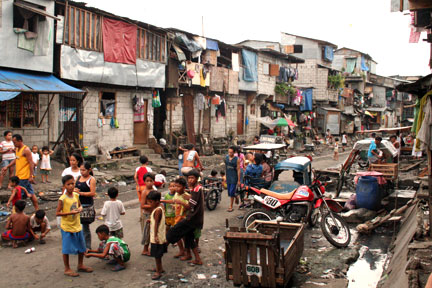
This story from Bulatlat, The Philippines's alternative weekly magazine, details how Tondo, a squatter community that has existed since the 1950s, is in line to be demolished in the drive to privatize the country's ports. The lucky thing is the neighborhood has a history of political activism and organizing. The bad news: 5,000 houses in neighboring barangays (squatter villages) have already been demolished in the past nine months.
Wednesday, November 22, 2006
evicted at gunpoint
Durban, SA: Residents of a small squatter community called Juba Place were pushed from their homes at gunpoint today. They were forced to relocate into shabby new homes across town, which another community also coveted. So now they have to be protected at gunpoint so their new neighbors don't evict them. Read the sordid details at abahlali.org.
Where water is a crime
People in the developed world might be amazed to hear this, but many of the leaders of Maclovio Rojas, a squatter community in Tijuana, Mexico, spent years in jail for the crime of stealing water.
These are people who have been living without this basic resource for 18 years. Their local, state, and national governments have done little to help them. They are treated as criminals for demanding access to something that is fundamental for human survival.
Maclovio Rojas is set on the scrubby hills on the eastern edge of Tijuana. Here, the dusty dirt streets are rutted and the homes sit precariously on the denuded turf. And yet people here have pooled their money and established their own schools. They have built an active community center and a neighborhood bank. They are striving desperately to improve their community.
Yet they are still considered illegal, still considered radical, still considered criminal.
When will Mexico and Tijuana recognize that these are citizens who should be offered cooperation and understanding and not charged with crimes for simply trying to make their lives and the life of their city better?
Sadly, Maclovio Rojas is not only fighting with the governments for recognition, but is also battling a nearby colonia, which has claimed the same land as its own holding. When squatters battle each other, the battle for legitimacy is weakened.
(praise be to Carlos--aka philipk--for his expertise on Tijuana and for introducing me to Maclovio Rojas)
These are people who have been living without this basic resource for 18 years. Their local, state, and national governments have done little to help them. They are treated as criminals for demanding access to something that is fundamental for human survival.
Maclovio Rojas is set on the scrubby hills on the eastern edge of Tijuana. Here, the dusty dirt streets are rutted and the homes sit precariously on the denuded turf. And yet people here have pooled their money and established their own schools. They have built an active community center and a neighborhood bank. They are striving desperately to improve their community.
Yet they are still considered illegal, still considered radical, still considered criminal.
When will Mexico and Tijuana recognize that these are citizens who should be offered cooperation and understanding and not charged with crimes for simply trying to make their lives and the life of their city better?
Sadly, Maclovio Rojas is not only fighting with the governments for recognition, but is also battling a nearby colonia, which has claimed the same land as its own holding. When squatters battle each other, the battle for legitimacy is weakened.
(praise be to Carlos--aka philipk--for his expertise on Tijuana and for introducing me to Maclovio Rojas)
Betrayal and the colour of the heart
An article by Philani Zungu, Deputy President of Abahlali baseMjondolo, a squatter organization in Durban, South Africa:
I hope that one day it will be realised by our government officials how much betrayal they have served to the floors on which they stand and where they belong. It is very sad that our politicians forget that their power started with people like us, people like the red shirts. Their silk suits come from older struggles, from other people struggling then like we do know in the yellow shirts of the UDF and the unions. When they were coming into power they told us that the only colour that mattered was the colour of the skin. But the black men in silk suits do not work for us. They work for the rich – black and white. They say that they are working to give us service delivery. They are really working to deliver us to the rich – to smash our informal shacks and either leave us homeless or dump us in formal jondolos in the bush. It is the colour of the heart that matters. In our struggle we have learnt that people of different skin colours have red hearts. It is the colour of the heart that matters.
Freedom is the equalisation of all people. All people need the same respect and all people need what is necessary for a proper life – some land, a house, water, electricity, access to good education and doctors, police and courts that work for the people, the chance for proper work and support for the young, the old and the sick. It is very sad that the people we trusted the most, the people we gave a mandate to secure our freedom, seem not to understand what is freedom. They understood quite well in the struggle but now they no longer understand. It is quite that the struggle is not over. We cannot just wait for service delivery. We are in a second phase of struggle. Older struggles put our people in the silk suits. Now our struggle, the second phase of struggle, has to force the men in silk suits to work for the poor and not the rich.
In the first struggle, when there was no freedom at all, people did not accept to be silent victims. People did not compromise. They were brave enough to put their lives at risk. Many people had so much faith that they gave up their lives to invest them in the new generation that would live in a free country. Now that we have some freedoms in law but no full freedom in reality, now that there is no better life for all, now that the government leaves shack dwellers to burn in the fires, beats us when we march and smashes up our homes and either leaves us homeless or dumps in formal jondolos in the bush why should we be silent? Why does the Municipality of Ethekwini expect Abahlali baseMjondolo to remain silent? Why are we expected to have unlimited patience while we are being attacked because ‘service delivery is coming’? Why are Abahlali baseMjondolo victimised when we claim back our humanity and the rights that we are promised with our citizenship? Why are we not allowed to work with academics at the university? Why are academics at the university not allowed to work with the poor? The answer is clear. This democracy is not for us. We must stay silent so that this truth can be kept hidden. This democracy is for the rich who will build and then enjoy themselves at uShaka, King Senzagakhona Stadium and King Shaka Airport. We will only go to these places to protect and clean up for the rich.
Today Fazel Khan, a sociologist at the University of KwaZulu-Natal (UKZN), is facing charges for speaking to the media. But it is very clear to Abahlali baseMjondolo that the intention behind these charges is to get rid of Fazel from the university. He must go because he has broken the rules. With other academics, academics who are already gone from the University, he has spoken to the poor instead of for the poor. He has worked with the poor instead of with the rich in the name of the poor. Abahlali already know what the outcome of Fazel’s case will be. His dismissal is the main objective of the university bosses right now.
For a long time we have heard rumours from various people that eThekwini City Manager, Mike Sutcliffe, has been boasting that he has instructed the university to get rid of Fazel Khan and Richard Pithouse. Last year the Mercury reported that the University Vice-Chancellor, Prof. Makgoba, had told Fazel that Mayor Obed Mlaba had instructed him to ‘act against academics working with Abahlali.’ It seems that this is now being accomplished with the charges against Fazel.
The people in power are fighting against the poor instead of serving the poor. Because the poor still exist in unfreedom it is clear that people in power are fighting against freedom.
I hope that one day it will be realised by our government officials how much betrayal they have served to the floors on which they stand and where they belong. It is very sad that our politicians forget that their power started with people like us, people like the red shirts. Their silk suits come from older struggles, from other people struggling then like we do know in the yellow shirts of the UDF and the unions. When they were coming into power they told us that the only colour that mattered was the colour of the skin. But the black men in silk suits do not work for us. They work for the rich – black and white. They say that they are working to give us service delivery. They are really working to deliver us to the rich – to smash our informal shacks and either leave us homeless or dump us in formal jondolos in the bush. It is the colour of the heart that matters. In our struggle we have learnt that people of different skin colours have red hearts. It is the colour of the heart that matters.
Freedom is the equalisation of all people. All people need the same respect and all people need what is necessary for a proper life – some land, a house, water, electricity, access to good education and doctors, police and courts that work for the people, the chance for proper work and support for the young, the old and the sick. It is very sad that the people we trusted the most, the people we gave a mandate to secure our freedom, seem not to understand what is freedom. They understood quite well in the struggle but now they no longer understand. It is quite that the struggle is not over. We cannot just wait for service delivery. We are in a second phase of struggle. Older struggles put our people in the silk suits. Now our struggle, the second phase of struggle, has to force the men in silk suits to work for the poor and not the rich.
In the first struggle, when there was no freedom at all, people did not accept to be silent victims. People did not compromise. They were brave enough to put their lives at risk. Many people had so much faith that they gave up their lives to invest them in the new generation that would live in a free country. Now that we have some freedoms in law but no full freedom in reality, now that there is no better life for all, now that the government leaves shack dwellers to burn in the fires, beats us when we march and smashes up our homes and either leaves us homeless or dumps in formal jondolos in the bush why should we be silent? Why does the Municipality of Ethekwini expect Abahlali baseMjondolo to remain silent? Why are we expected to have unlimited patience while we are being attacked because ‘service delivery is coming’? Why are Abahlali baseMjondolo victimised when we claim back our humanity and the rights that we are promised with our citizenship? Why are we not allowed to work with academics at the university? Why are academics at the university not allowed to work with the poor? The answer is clear. This democracy is not for us. We must stay silent so that this truth can be kept hidden. This democracy is for the rich who will build and then enjoy themselves at uShaka, King Senzagakhona Stadium and King Shaka Airport. We will only go to these places to protect and clean up for the rich.
Today Fazel Khan, a sociologist at the University of KwaZulu-Natal (UKZN), is facing charges for speaking to the media. But it is very clear to Abahlali baseMjondolo that the intention behind these charges is to get rid of Fazel from the university. He must go because he has broken the rules. With other academics, academics who are already gone from the University, he has spoken to the poor instead of for the poor. He has worked with the poor instead of with the rich in the name of the poor. Abahlali already know what the outcome of Fazel’s case will be. His dismissal is the main objective of the university bosses right now.
For a long time we have heard rumours from various people that eThekwini City Manager, Mike Sutcliffe, has been boasting that he has instructed the university to get rid of Fazel Khan and Richard Pithouse. Last year the Mercury reported that the University Vice-Chancellor, Prof. Makgoba, had told Fazel that Mayor Obed Mlaba had instructed him to ‘act against academics working with Abahlali.’ It seems that this is now being accomplished with the charges against Fazel.
The people in power are fighting against the poor instead of serving the poor. Because the poor still exist in unfreedom it is clear that people in power are fighting against freedom.
Saturday, November 18, 2006
two-faced in San Diego
So as I arrived in San Diego to make a presentation on squatters at San Diego State University, these two news stories suddenly seemed terrifically relevant:
1. Residents in San Diego's ritzy McGonigle Canyon area are mobilizing to push out a squatter encampment established by Mexican day laborers in the wilds of the canyon. They offer no plan to work with the laborers to find better housing solutions.
2. The City Council of nearby Escondido has passed an ordinance to make it a crime for illegal aliens to rent apartments in that city.
It's a classic catch 22: one city pushes out squatters, telling them to get apartments, while an adjacent city makes it illegal for those same people to rent apartments.
1. Residents in San Diego's ritzy McGonigle Canyon area are mobilizing to push out a squatter encampment established by Mexican day laborers in the wilds of the canyon. They offer no plan to work with the laborers to find better housing solutions.
2. The City Council of nearby Escondido has passed an ordinance to make it a crime for illegal aliens to rent apartments in that city.
It's a classic catch 22: one city pushes out squatters, telling them to get apartments, while an adjacent city makes it illegal for those same people to rent apartments.
Cape Town prepares for official violence against squatters
Here's a disturbing story: the Red Ants--a private security force known for assaulting squatters and destroying their homes--are being brought to Cape Town to assist in squatter relocation, the Cape Argus reports.
Tuesday, November 14, 2006
gecekondu resistence


Ankara squatters are starting to demonstrate for their rights. These pictures are from sendika.org. An article, in Turkish, can be found at http://www.sendika.org/yazi.php?yazi_no=8171.
Thanks to Ercüment Celik for the link.
Friday, November 10, 2006
Killings in Mathare
Thousands of refugees are fleeing the Mathare shantytown in Nairobi after four days of fighting between two rival gangs. The battle between the Mungiki and the Taliban has claimed eight lives so far. The Daily Nation, via allAfrica.com has details.
Tuesday, November 07, 2006
Squatter Book Stalls Evicted
Hyderabad's oldest book market -- which had been in the same place for better than 30 years -- was destroyed by court order yesterday, The Hindustan Times reports. "Shop owners could be seen crying when municipal employees forcibly dumped books in vehicles and bulldozed the structures," the paper reported. Those who tried to resist were arrested.
'The spirit of Murambatsvina should not die'
That's a quote from Zimbabwe's Local Government Minister Ignatius Chombo, who announced that a new drive against squatters, shack dwellers, and illegal structures of all sorts will begin -- perhaps as soon as next week. South Africa's Mail & Guardian Online has the story.
Wednesday, November 01, 2006
ANC uses tear gas in Durban evictions
A low level war is brewing in Durban, as the muncipal government has moved on squatters in the Motala Heights neighborhood, the Independent Online reports. Squatters assert that beyond knocking down 15 homes, the authorities used tear gas and actually shot at squatters during a recent demolition drive. The squatter community at Motala Heights has existed for better than 30 years -- and the authorities had no court authorization for the eviction action.
Saturday, October 28, 2006
flinging the shit
Outsiders always seem fascinated by the concept of 'flying toilets' -- the practice in some Kenyan communities that lack water and sewers, of people defecating in plastic bags and flinging them as far from their homes as possible. Inter Press Service News Agency revisits the story to see whether flying toilets are still in use in 2006.
Subscribe to:
Posts (Atom)

 Posts
Posts