Tuesday, February 07, 2012

don't they deserve dignity?

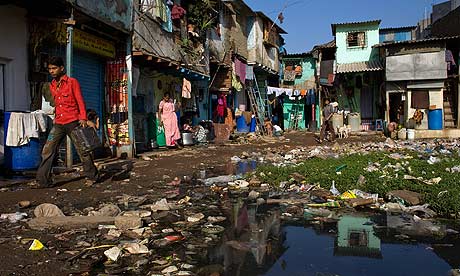
Treating people with dignity seems out of the question in Brazil, where authorities are moving ever faster to transform 12 cities for the World Cup and the Olympics. As the Associated Press reports, about 170,000 people have been threatened with ejectment, or have already been ejected from their homes.

Evandro dos Santos, from Favela do Metro, whose home and store are scheduled to be destroyed in a sprucing up of Maracana stadium, told the AP, "I have built something here - a house, a business. That's what I want. Not a gift, not charity. I want to keep on working and earning my money and feeding my family."

From the article:
With preparations starting for the Olympics and World Cup, Metro's residents initially were offered government-built housing in a working-class suburb 45 miles away, with poor access to transportation and jobs. About 100 families accepted, under duress. Another 100 or so took the offer that followed: resettlement in a closer housing project. About 270 families are resisting the move, said the Metro residents association president, Francicleide Souza. "We are living in fear and uncertainty," Souza said. "We don't know what will happen to our families tomorrow." Compensation paid per home for Rio's removals in 2010 averaged $16,000. The amount varies according to the size and quality of a structure. The money offered is not nearly enough to find another home in Rio, said Eliomar Coelho, a city councilman heading an investigation into removals. Market studies say Rio's real estate is now among the most expensive in the Americas.
The world over, fancy sporting events have always meant massive evictions. The question is why? Why are poor people considered an eyesore? Why does the convenience of tourists matter more than the dignity and well-being of the population? Why do governments refuse to treat people with justice, fairness and dignity?

Tuesday, January 31, 2012

a new book on Bombay squatters

Katherine Boo's new book, Behind the Beautiful Forevers, about life in the Mumbai squatter community of Annawadi, sounds interesting, according to this review in The New York Times.

Monday, January 30, 2012

From the Super Bowl to Kibera

cross-posted from Stealth of Nations: http://bit.ly/ymHS6E

Friday, January 13, 2012

invest in life

crossposted from Stealth of Nations:


You, too, can invest in something infinitely more valuable than profits. It's a strange new commodity called life.

As The New York Times reports, Copenhagen's Christiania squatters, famed for their anti-free market ways, are selling shares in their community so they can buy it from the government. What do you get for your investment: "a symbolic sense of ownership in Christiania and the promise of an invitation to a planned annual shareholder party." As one squatter calls it, "ownership in an abstract form."


According to the Copenhagen Post, after striking a deal with the state this summer,  Christiania residents now need to raise 76.2 million kroner (almost $13 million) to buy the  majority of the area’s properties and an additional six million kroner  to rent adjoining green spaces. The first 43 million kroner (or approximately $8 million) is due on 15  April 2012. Several prominent people have purchased Christiania Shares, including  Margrethe Vestager, minister of the economy and interior, and Mogens  Lykketoft, president of parliament. The shares are available for  purchase online at www.christianiafolkeaktie.dk.

Wednesday, January 11, 2012

Squatters in New York

A decade or so ago, there were well-established communities of the homeless all over the New York City, set up by people who formed close bonds and knew that the shelter system was too dehumanizing and brutalizing for them. The pier on Twelfth Avenue just across from the Chinese consulate had several dozen wooden shacks. A median in Long Island City, Queens, where two seldom-used freight lines parted ways, was a friendly location for another encampment. Photographer Margaret Morton documented the homeless casitas of the city and the community in the tunnel under Riverside Park.

Most of these communities have been destroyed, either because these locations have been reclaimed for use (AMTRAK now runs trains to Albany along the previously derelict Riverside Park tracks) or because real estate interests pushed to clear these parcels.

Now, The Brooklyn Daily reports on a small shantytown in Coney Island that has lived against the odds for five years. I hope this community survives its new-found publicity.

Tuesday, January 10, 2012

who guards the guardians

The New York Times offers a recap of the violent doings of the police in Rio de Janeiro. Which brings up the question: with the growth of the program of so-called 'pacification' that pushes drug dealers out from their perches in the favelas and replaces them with the police, are they making life in the favelas any better. One answer, from Alba Zaluar, a famous Brazilian academic who has long studied police tactics in Rio: “They’re invading, watching over, buying favelas from traffickers.” Not comforting words.

It's long been known that the police take payoffs from the drug gangs. It's long been known that most of the shooting deaths in Rio involve the cops. As the Times article shows, the cops are just like the drug dealers--they're not afraid to torture and kill people they perceive as their enemies, and the top echelon of police militia leaders run their semi-official gangs from jail.

Pacification, it seems, only replaces one brutal criminal gang with another. And the new one may be worse. The police are invaders and occupiers with no roots in the favelas. At least the drug dealers were communitarian outlaws.

Wednesday, December 28, 2011

homes v. archeology

Hundreds of squatters have erected new shacks on archeologically important spots in southern Peru, Peru This Week reports (based on an earlier article in the Peruvian paper El Comercio). The new settlements, which were built with the support of local politicos, have apparently endangered portions of the Nazca lines, the 1500-year-old geoglyphs that were created by an ancient Peruvian culture. The Nazca lines were designated a UNESCO World Heritage site in 1994.

Preservation of archeological sites is crucial for greater understanding of our origins and history. Nonetheless, this land invasion shows how desperate people are for a place to live. The political structure and property-owning system conspire to deny people a right to a place to call home. As a result, people often seize the most readily available land where they will be least likely to be immediately displaced--tracts with disputed titles, parcels in dangerous locations, or properties that have been removed from private development because of other concerns--in this case the need for preservation of the archeological record.

If the towns in the Nazca region would allocate other parcels for the squatters, they wouldn't have to obliterate the geoglyphs.

Friday, December 09, 2011

inexcusable evictions in Rio

Rio de Janeiro is using the coming World Cup and Olympics as an excuse to demolish major swathes of favelas in the Zona Sul--the tourist zone of the city. These videos--at once jaw-droppingly awful and incredibly inspiring--tell the story. Note, in the second video, about the community called Pavao Pavaozinho, that you can see the beachfront highrises out peoples' windows. This shows just how valuable the real estate is in these areas.

People have lived in these favelas for generations. The government has never cared about their lives or their communities. Now, suddenly, with the spark of development and the increase in real estate values due to the games, their communities are areas of interest. The city plans to tear down 123 areas and relocate 13,000 families (though relocation is often to the most remote areas of town, impossibly far from work and economic opportunity, and there is no compensation for the decades of commitment and labor people have put into their communities.)

The World Cup will be taking place in eight major cities around Brazil--and all of them are using the contest as an excuse to eradicate vulnerable communities. These neighborhoods are not primitive. With no investment from outside and no government assistance, people have improved their communities, going from mud and stick settlements to brick and reinforced concrete structures in one generation. They get no credit for this. In fact, it's just the reverse: they are called illegal occupiers and criminals.

Brazil has lost a major opportunity to show the world that major global sporting events can be organized in an inclusive and egalitarian manner.

(hat tip to Tanya for sending the link my way.)

Tuesday, November 29, 2011

social commerce, DIY-style

Writing in The Guardian, Adam Werbach, the former head of the Sierra Club, endorses squatter savings schemes and do-it-yourself development through the informal economy as the way forward for the megacities of the developing world. "Who will fix this?" a squatter asks rhetorically as she imagines the monsoon rains that will flood her newly-tiled home next year. "It is we, ourselves."

Monday, November 28, 2011

140 characters in search of Caracas

Francisco Toro writes on his blog on the New York Times site that 600 squatter communities in the Venezuelan capital have joined a non-profit called Radar de los Barrios, which uses Twitter to help neighboring communities communicate. “Working-class settlements here don’t communicate much with one another,” the group’s director, Jesus Torrealba, said. Community activists often have little insight into what is happening in the next barrio just a few miles away. Twitter cuts through this isolation, helping create a network among independently minded activists who contest the government’s policies.

Toro, who identifies himself as "opposition-leaning-but-not-insane" also blogs at Caracas Chronicles, and has written that "one of the more difficult things about my job is communicating to a First World audience that unmistakable taste of sheer thuggishness the Chávez government leaves in your mouth."

Friday, November 11, 2011

the wierd turn pro in Rio

Nem -- aka Antônio Francisco Bonfim Lopes -- the dono do morro of Rocinha, was captured this week by police in Rio de Janeiro. It's a wacky story (The Guardian offers details): the local drug gang boss tried to flee the favela in the trunk of a car. And his bodyguards apparently told the cops they were African diplomats.

According to the article, police claimed that Nem's drug trade in Rocinha involved "200 rifle-toting soldiers who were responsible for selling some 200kg of Bolivian cocaine a month" and brought in an annual fortune of around $57 million.

Of course, my time in Rocinha was a decade back, so I can't really talk about current reality (though, given what I've read about recent coke busts, the value given seems absurdly high.) But, a friend has pointed out that the police are about to occupy Rocinha in a highly publicized putsch, which probably means that the local cops were no longer going to be able to take their traditional pay-offs from the drug lord. Add to this the fact that Rio is desperately trying to clean its image in preparation for the World Cup and the Olympics, and the bust seems like a pretty shrewd PR move.

If anyone from Rocinha reads this, please let us know what's going on.

Tuesday, November 01, 2011

The UK's anti-squatter plan

The UK government has fast-tracked its attempt to change the law to make it easier to evict squatters, and the proposal is set to be debated tomorrow. The charity Housing Justice opposes the Cameron Administration plan. Money quote: "The existing law already allows for the fast track eviction of squatters if the displaced occupier needs the home to live in....The proposed amendment is particularly worrying as it will mean that all of the people currently living in squats will be committing a crime should it come into law. This will create a situation in which tens of thousands of people nationwide stand to lose their home." Independent Catholic News has details.

Monday, October 31, 2011

good for goats, bad for people

Count 80,000 people homeless and a bunch of goats happy after Kyang’ombe, a squatter community near Jomo Kenyatta International Airport, in Nairobi, was demolished last week. The airport authority suggests that the neighborhood was dangerously near runways and in the flight path of many planes. But Muungano Wa Wanavijiji, a squatter federation and advocacy group, has suggested that the real impetus for the eviction, which started at around midnight on Friday, was that politically connected developers had taken control of the land.

Wednesday, October 26, 2011

Me on NPR's 'Fresh Air'

I will try to avoid posting too many plugs for my new book on this blog. But I can't resist popping this one up: Today, the National Public Radio show Fresh Air discovers the informal economy.

Monday, October 17, 2011

my new book

crossposted from my blog Stealth of Nations

Well, it's finally arrived:

Stealth of Nations, the book, hits the stores tomorrow. On Saturday, the The Wall Street Journal reviewed it. And you can get a taste of what's inside the covers on Bloomberg View.

Wednesday, October 05, 2011

squat or what?

Britain's conservative government wants to tilt the nation's laws against squatters, The New York Times reports. But at what cost. While some landlords may find ejecting squatters legally a cumbersome process, the article also notes that "Housing advocates say there are an estimated 762,000 empty and abandoned properties in Britain that would actually benefit by having tenants. And with homelessness likely to increase in the next few years, as deep cuts in housing allowances for welfare recipients take affect, advocates say it would make sense to match tenantless homes with homeless tenants

After all, as one housing lawyer told the paper, squatting is hard work and most people are serious about needing a home. “Most squatters who are actually looking for a place to live are doing it on entirely rational grounds, and not looking for somewhere where there’s a homeowner likely to turn up at any moment,” that attorney, Giles Peaker, said. “They’re looking for something that’s long-term vacant, where the owner has dropped the ball."

Tuesday, September 13, 2011

mud vs. sheetmetal

Five more people have died in the wake of the oil leak inferno that burned through the Sinai squatter community in Nairobi. The disaster is mind-boggling and awful. But it has left me wondering about a simple but little remarked fact: As the picture of Kenyan Prime Minister Raila Odinga touring the community shows, Sinai was built mostly of corrugated metal--a cheap and incredibly time- and labor-saving building material. A stick frame and some rolls of steel and a community can be created in minutes. Older squatter communities -- Kibera, for instance -- feature homes built mostly from mud, which must be dug, and mixed with water to the right consistency, and built up by someone who knows what they are doing. Mud is a better insulator--keeping homes warm during cool seasons and cool during warm times. Steel, by contrast, conducts the heat--and metal homes often become overheated in sunny weather. I'm wondering if a community made from mud or brick would have fared better in warding off the flames, and how many of the burn injuries were from the flames and how many were inflicted as people attempted to flee their superheated sheetmetal houses.

Monday, September 12, 2011

river of bodies

Tragedy in Kenya's capital as an oil pipeline in a squatter community ruptured early Monday morning, and turned deadly soon thereafter when it ignited into a fireball, killing 100 and sending hundreds more to the hospital.

Sinai is a small squatter community in Nairobi's industrial area, not far from Jomo Kenyatta International Airport. The oil pipeline, which slices across the community and apparently runs to the airport, sprung a huge leak, sending oil cascading down the community's streets and into the nearby Ngong River. Many community residents headed towards the leak, to gather some of the valuable fuel. Somehow, the oil ignited--the New York Times reports the blaze took hold because cinders from a nearby garbage fire blew over in the wind, though other sources speculate about different causes. But whatever happened, the blast of flame was deadly.

The Nation newspaper reports that a loose gasket in the pipeline was responsible for the oil leak, and notes that "There were two different accounts of the cause of the inferno. While some of the survivors said the petrol from the pipeline came with the fire, others said it was lit by a man smoking a cigarette." The paper also offers a 2 minute TV news report from the scene.

The Standard reports that oil pipelines have a lifespan of about 25 years, while this one had been in continual service for 33 years, adding that and a decade-old study commissioned by the public/private commission that manages the pipeline had concluded that it was obsolete--but that the commission rejected the report and instead expanded its usage. Just a few weeks back, the government's energy secretary called for it to be replaced within three years.

The Guardian also has details, and a short video.

Saturday, September 10, 2011

Accra politicos vow demolition & eviction

The political class of Accra, Ghana, have vowed to evict 80,000 people from the squatter community called Sodom and Gomorrah. "Whether or not the people have their homes there does not matter, the final decision is that it has to go.” the municipality's Public Relations Officer, Numo Blafo, told My Joy Online.

It seems as if the municipality doesn't understand why people come to the city. As stalwart anti-demolition advocate Farouk Braimah, from Peoples Dialogue on Human Settlement, explained, "it is income that brings people to the city and not shelter."

In other words, demolishing a community doesn't stop people from coming to Accra and certainly doesn't make the housing crisis go away. It just pushes poor and working people further out of town. That's urban removal not urban renewal.

when the city owns vacant buildings

The Squatters Advis­ory Service in the UK submitted a Freedom of Information request to the Camden Council in London seeking a complete list of vacant properties in the area. The group has now won a court judgment in its favor -- a decision one City Councillor described as "lunacy."

But Paul Reynolds, a spokesman for Squash, a squatters' rights group, makes a lot of sense when he explains the decision: “It is about accountability. They will no longer be able to hide the extent of empty, publicly-owned housing in Camden. And if nothing is done to fix, repair or fill an empty home, homeless people can move in until this is done, which is a good thing. If Camden does not want this to happen, they should put people in these properties.”

That's a bright idea. Are you listening, Detroit (and all the other American cities with large patches of abandonment)?

The Camden New Journal offers the details.